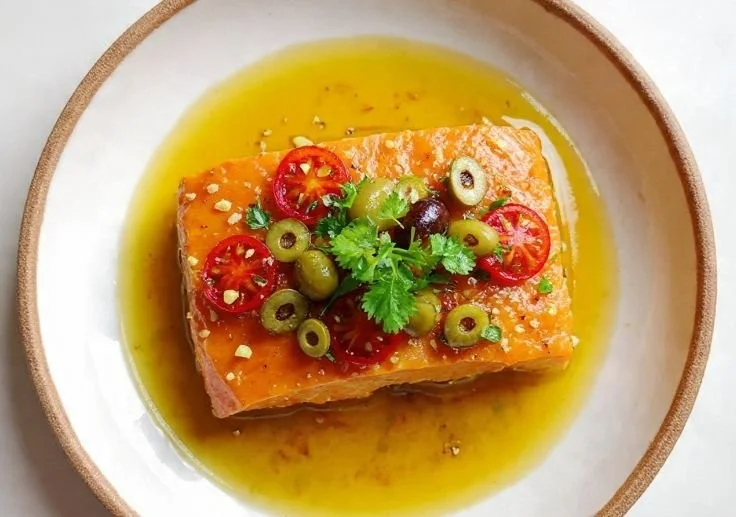
Slow-Roasted Salmon with Garlicky Tomatoes, Olives, and Herbs
There’s a reason the oven becomes a stage for magic on busy nights: the slow roast transforms simple ingredients into something soulful. As this salmon cooks, the kitchen fills with the warm, herb-scented perfume of thyme and garlic, tasting of sun-ripened tomatoes and briny olives. The fish itself becomes buttery and flaky, the tomatoes burst into sticky, garlicky goodness, and the pan juices—laced with olive oil and herbs—become a finishing sauce you’ll want to spoon over everything.
This dish is perfect when you want an impressive yet relaxed meal: a cozy weekend supper, a casual dinner party where you’d rather chat than fuss, or a make-ahead centerpiece for holiday menus. If you enjoy oven-baked tomato-forward dishes, you might also like my take on baked feta eggs with tomatoes and spinach, which shares that same sunny, communal spirit.
At a Glance
- Prep time: 10 minutes
- Cook time: 35–45 minutes (slow roast at 300°F / 150°C)
- Total time: 45–55 minutes
- Servings: 4 (about 6 oz / 170 g salmon per person)
- Difficulty: Easy — forgiving, great for home cooks of all levels
Nutrition Highlights
Estimated nutrition per serving (one quarter of the recipe). Values are approximate and calculated using USDA FoodData Central standard nutrient profiles and typical portion sizes; individual results will vary with exact ingredients and brands. For general dietary guidance, trusted resources include the CDC and Mayo Clinic.
- Calories: ~520 kcal
- Protein: ~35 g
- Total fat: ~39 g
- Saturated fat: ~7.5 g
- Carbohydrates: ~6 g
- Fiber: ~2 g
- Sugars (natural from tomatoes): ~3–4 g
- Sodium: ~870 mg
Notes:
- Much of the fat and heart-healthy omega-3s come from the salmon and olive oil—both nutritious when eaten in moderation. Sodium can vary widely depending on the olives you choose (brined olives are higher) and how much additional salt you add; reduce added salt or use low-sodium olives to lower sodium per serving. (Nutrient references: USDA FoodData Central; general health guidance: CDC, Mayo Clinic.)
Why You’ll Love It
This recipe hits comforting, celebratory, and everyday notes at once. The slow roast gives salmon an indulgent texture without babysitting the stove; the garlicky tomatoes and olives add Mediterranean brightness and depth. It’s a dish that brings people together: simple to scale for a family dinner, but elegant enough for guests. It’s also heart-smart—rich in omega-3s from salmon and monounsaturated fats from olive oil—while relying on fresh herbs and vegetables for flavor rather than heavy sauces.
Step-by-Step Instructions
Ingredients
- 1.5 pounds (about 680 g) salmon fillet, skin on
- 2 cups cherry tomatoes, halved (about 300 g)
- 4 garlic cloves, thinly sliced
- 3/4 cup mixed olives, pitted (about 110 g)
- 1 tablespoon fresh thyme, chopped (or 1 teaspoon dried thyme)
- 2 tablespoons fresh parsley, chopped (for finishing)
- 1/4 cup extra-virgin olive oil (60 ml / 4 tbsp)
- 1 teaspoon kosher salt (adjust to taste)
- 1/2 teaspoon black pepper
- 1/4 teaspoon red pepper flakes (optional, for heat)
Optional ingredients and substitutions
- Lemon slices or a splash of white wine added to the baking dish for brightness.
- Swap thyme for oregano or rosemary (use rosemary sparingly; it’s stronger).
- Use skinless salmon if preferred (the skin helps protect the fish during slow roast).
- For a lower-sodium version, use 1/2 teaspoon salt and low-sodium olives or rinse brined olives briefly.
Directions
- Preheat the oven to 300°F (150°C). Position a rack in the center of the oven.
- In a mixing bowl, combine the halved cherry tomatoes, sliced garlic, mixed olives, chopped thyme, olive oil, salt, black pepper, and red pepper flakes (if using). Toss gently to coat. Avoid overmixing so tomatoes don’t burst prematurely.
- Spread the tomato-olive mixture in an even layer in a shallow baking dish (large enough to hold the salmon comfortably).
- Place the salmon fillet, skin-side down, in the center of the dish on top of the tomato mixture. Spoon some of the tomato mixture over the top of the salmon so it nests in the juices.
- Roast in the preheated oven for 35 to 45 minutes, depending on thickness. The low temperature will gently cook the fish—check at 35 minutes. The salmon is done when it flakes easily with a fork and the internal temperature reaches 125–130°F (52–54°C) for medium-rare to medium (it will carry over cook a little while resting).
- Remove from the oven and sprinkle with fresh parsley and, if you like, a squeeze of lemon. Let rest for 5 minutes before serving to allow juices to settle.
- When plating, spoon the garlicky tomatoes and their pan juices over the salmon so every bite is saucy.
Practical tips
- Avoid high oven temperature—slow roasting preserves silky texture.
- If your salmon is uneven in thickness, fold a bit of foil under the thinner end to even it out for even cooking.
- Check doneness by sliding a small knife into the thickest part and lifting slightly; perfectly cooked salmon will flake but remain moist.
- Leftover pan juices are flavor gold—use them on grains, vegetables, or toast.
Best Pairings
- Light starches: buttery mashed potatoes, polenta, or lemony couscous.
- Green vegetables: sautéed spinach, blistered broccolini, or a crisp fennel salad.
- Grains: herbed quinoa or farro tossed with a splash of the pan juices.
- Brunch twist: serve with eggs and toast for an indulgent weekend brunch—pair with delicious pancakes with berries and almonds for a sweet-savory spread.
Presentation tip: serve the fillet whole on a warmed platter with the tomatoes spooned over, garnish with parsley and lemon wedges.
Shelf Life & Storage
- Room temperature: Do not leave cooked seafood at room temperature for more than 2 hours (1 hour if above 90°F / 32°C) for safety.
- Refrigerator: Store cooled leftovers in an airtight container for 3–4 days. Reheat gently in a low oven (275–300°F / 135–150°C) or eat cold flaked over salads.
- Freezer: Cooked salmon can be frozen for 2–3 months. Wrap tightly in plastic wrap and place in an airtight container or heavy-duty freezer bag. Thaw overnight in the fridge before reheating.
Chef’s Advice
- Choose a good-quality salmon: wild-caught or responsibly farmed Atlantic/Coho are excellent choices—look for firm, moist flesh and a fresh ocean scent.
- Use extra-virgin olive oil for flavor, but don’t be afraid to use a neutral oil if you want the tomatoes and fish to shine more.
- Control salt carefully: olives add concentrated saltiness. Taste the tomato-olive mix before adding all the salt—some olives may be very briny.
- Doneness cue: visual flake + gentle pressure is more reliable than time alone. For a slightly glossy, buttery center, remove at 125–130°F; for well-done, aim for 135–140°F.
- Let it rest: the salmon will firm up slightly and reabsorb some juices, improving texture.
Recipe Variations
- Lemon-Caper Variation: Replace mixed olives with 2 tablespoons capers and add the zest of one lemon for a bright, briny finish.
- Mediterranean Vegetable Medley: Add sliced red onion, thin strips of roasted red pepper, and a handful of baby spinach tucked around the fish to make it a one-pan meal.
- Dairy-Free “Creamy” Finish: Stir a spoonful of mashed ripe avocado into the pan juices after roasting for a silky, dairy-free sauce.
- Vegan/Plant-Based Alternative: Roast firm marinated tofu or large portobello mushrooms in place of salmon; increase roast time slightly for mushrooms and press tofu beforehand to remove excess moisture.
Frequently Asked Questions
Q: Can I cook this at a higher temperature to save time?
A: Higher temperatures will cook faster but risk drying the salmon. If pressed for time, roast at 375°F (190°C) for 15–20 minutes, but watch closely and expect a firmer texture.
Q: My tomatoes burst and made the dish watery—what went wrong?
A: A few burst tomatoes are fine and contribute flavor; if most burst, it may be from over-tossing or very ripe tomatoes. Halve larger tomatoes and leave smaller ones whole to balance.
Q: How can I make this lower in sodium?
A: Use low-sodium or rinsed olives, reduce added salt to 1/4–1/2 teaspoon, and skip brined toppings. Fresh lemon and herbs will enhance flavor without more sodium.
Q: Is this recipe freezer-friendly?
A: Yes—see the Storage section. Freeze cooked portions for up to 2–3 months; textures are best within the first month.
Q: Can I use fillets instead of one whole piece?
A: Yes. Arrange fillets skin-side down and reduce cooking time slightly—check for doneness at around 25–30 minutes.
Conclusion
This slow-roasted salmon with garlicky tomatoes, olives, and herbs gives you a hands-off, high-impact entrée that feels both homey and sophisticated—perfect for weeknights and special occasions alike. If you’d like to compare technique and flavor notes, I recommend the classic approach in the Kitchn’s slow-roasted salmon recipe, and for another roasted-salmon perspective try the variation at What We Eat NYC’s roasted salmon with tomatoes, garlic and chopped herbs.
If you make this, please share a photo or a comment—I love hearing how readers adapt the dish for their table.
Print
Slow-Roasted Salmon with Garlicky Tomatoes, Olives, and Herbs
- Total Time: 50 minutes
- Yield: 4 servings 1x
- Diet: Pescatarian
Description
A hands-off, high-impact entrée of slow-roasted salmon with garlicky tomatoes and olives, creating a buttery, flaky fish topped with a flavorful sauce.
Ingredients
- 1.5 pounds (about 680 g) salmon fillet, skin on
- 2 cups cherry tomatoes, halved (about 300 g)
- 4 garlic cloves, thinly sliced
- 3/4 cup mixed olives, pitted (about 110 g)
- 1 tablespoon fresh thyme, chopped (or 1 teaspoon dried thyme)
- 2 tablespoons fresh parsley, chopped (for finishing)
- 1/4 cup extra-virgin olive oil (60 ml / 4 tbsp)
- 1 teaspoon kosher salt (adjust to taste)
- 1/2 teaspoon black pepper
- 1/4 teaspoon red pepper flakes (optional, for heat)
Instructions
- Preheat the oven to 300°F (150°C). Position a rack in the center of the oven.
- In a mixing bowl, combine the halved cherry tomatoes, sliced garlic, mixed olives, chopped thyme, olive oil, salt, black pepper, and red pepper flakes (if using). Toss gently to coat.
- Spread the tomato-olive mixture in an even layer in a shallow baking dish.
- Place the salmon fillet, skin-side down, in the center of the dish on top of the tomato mixture. Spoon some of the tomato mixture over the top of the salmon.
- Roast in the preheated oven for 35 to 45 minutes until the salmon is done and flakes easily with a fork.
- Remove from the oven and sprinkle with fresh parsley and a squeeze of lemon, if desired. Let rest for 5 minutes before serving.
- Spoon the garlicky tomatoes and their pan juices over the salmon before serving.
Notes
Avoid high oven temperatures for slow roasting; this preserves the salmon’s silky texture. The leftovers can be used on grains, vegetables, or toast.
- Prep Time: 10 minutes
- Cook Time: 40 minutes
- Category: Main Course
- Method: Baking
- Cuisine: Mediterranean
Nutrition
- Serving Size: 1 serving
- Calories: 520
- Sugar: 3g
- Sodium: 870mg
- Fat: 39g
- Saturated Fat: 7.5g
- Unsaturated Fat: 31.5g
- Trans Fat: 0g
- Carbohydrates: 6g
- Fiber: 2g
- Protein: 35g
- Cholesterol: 75mg