
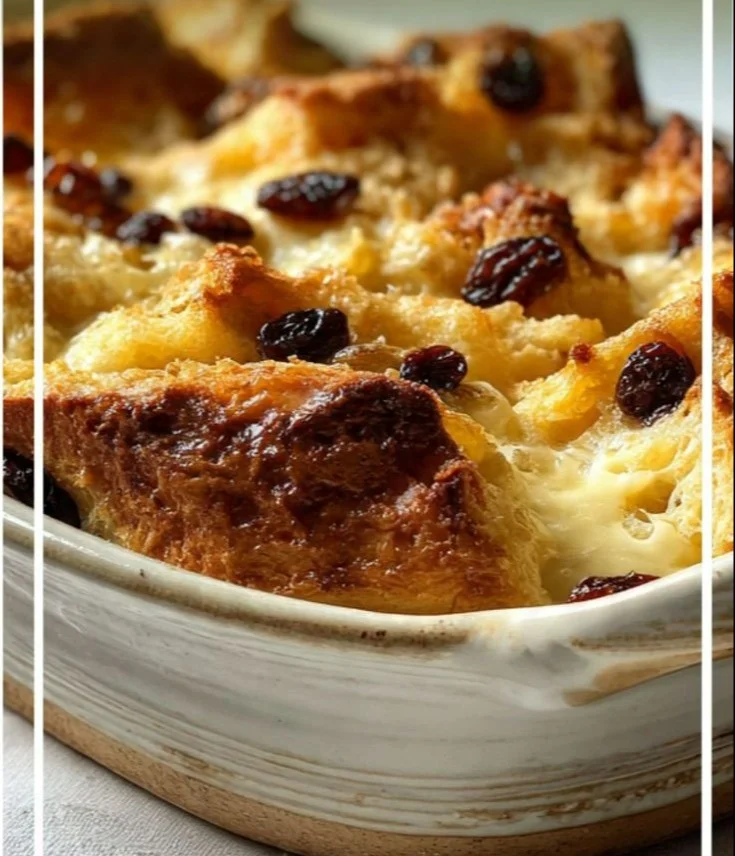
At the Stove: A Warm Slice of Home — Bread and Butter Pudding
There’s something almost magical about the first spoonful of warm bread and butter pudding: a crackle of golden top gives way to a custardy, silky center scented with vanilla and cinnamon, dotted by plump, sticky raisins. The aroma—baked milk and butter with caramelized sugar—wraps the kitchen in immediate comfort. Each forkful balances soft soaked bread, the tender lift of baked eggs and cream, and the little chewy bursts from dried fruit. It’s the kind of dessert (or breakfast) that feels like a hug from your grandmother: nostalgic, simple, and utterly satisfying.
This recipe is perfect when you want to transform leftover bread into something celebratory without fuss. Make it for a chilly weekend brunch, a cozy holiday morning, or a low-effort dessert for a small gathering. If you’re saving time on busy days, pair it with a pot of strong coffee and a selection of simple toppings for an effortless treat. For inspiration on other relaxed, crowd-pleasing sweets you can assemble quickly, try this collection of no-bake dessert ideas that are great companions to bread-based puddings.
At a Glance
- Prep Time: 15 minutes (plus 10 minutes soaking)
- Cook Time: 30–40 minutes
- Total Time: 55–65 minutes
- Servings: 6 (comfort-size portions)
- Difficulty Level: Easy — perfect for beginner bakers
Nutritional Breakdown
Estimated nutrition per serving (based on 6 servings):
- Calories: ~510 kcal
- Protein: ~11 g
- Carbohydrates: ~68 g
- Fat: ~22 g
- Saturated Fat: ~12 g
- Sugar: ~33 g
- Dietary Fiber: ~2.5 g
- Sodium: ~260 mg
Notes on accuracy: these are approximate values calculated from standard portion sizes and USDA FoodData Central entries for white bread, large eggs, whole milk, heavy cream, granulated sugar, and raisins. For personalized dietary advice or precise tracking (especially regarding cholesterol or allergies), consult resources such as the USDA FoodData Central and guidance from the CDC or Mayo Clinic.
Why You’ll Love It
- Nostalgia and comfort: This pudding evokes warm family memories and feels like a special-but-homely treat.
- Economical and waste-reducing: It’s a classic way to use day-old bread and small pantry staples.
- Low effort, high reward: Minimal hands-on time produces a show-stopping, custard-drenched bake.
- Versatile: Serve as breakfast, dessert, or a sweet snack—ideal for brunches, festive mornings, or intimate dinners.
Step-by-Step Instructions
Ingredients:
- 8 slices of buttered bread (day-old is perfect)
- 4 large eggs
- 2 cups (480 ml) whole milk
- 1 cup (240 ml) heavy cream
- 3/4 cup (150 g) granulated sugar
- 1 teaspoon vanilla extract
- 1/2 teaspoon ground cinnamon (optional)
- 1 cup (150–165 g) raisins
Optional ingredients and substitutions:
- Use brioche or challah for richer flavor; whole wheat or sourdough for more texture.
- Swap raisins for chopped dried apricots, figs, or fresh berries (reduce baking time slightly for very juicy fruit).
- For a lighter version, replace heavy cream with an additional cup of milk (custard will be less rich).
- For a dairy-free/vegan option, use coconut cream and a flax-egg (see Variations section).
- Add a splash (1–2 tablespoons) of rum or orange liqueur to the custard for an adult twist.
Method:
- Preheat the oven to 350°F (175°C).
- Grease a baking dish and layer the buttered bread slices in it.
- In a mixing bowl, whisk together eggs, milk, cream, sugar, vanilla extract, and cinnamon if using.
- Pour the custard mixture over the bread, ensuring even coverage.
- Sprinkle raisins on top.
- Let it sit for about 10 minutes for the bread to soak up the custard.
- Bake for 30-40 minutes until the top is golden brown and the custard is set.
- Serve warm, optionally with a dollop of cream or ice cream.
Practical tips:
- Let the bread soak fully but don’t stir vigorously—press gently so slices absorb custard without turning into mush.
- Test doneness by inserting a knife into the center: it should come out mostly clean and the custard should be set but slightly wobbly.
- If the top browns too quickly, tent loosely with foil for the last 10–15 minutes.
- For even soaking, cut thick crusts or score dense slices so custard penetrates more easily.
Best Pairings
- Classics: Serve warm with crème fraîche, lightly whipped cream, or a scoop of vanilla ice cream.
- Beverages: A robust coffee, milky tea, or a sweet dessert wine (Sauternes or a late-harvest Riesling) pairs beautifully.
- Light accompaniments: Fresh sliced fruit (pear, apple), a drizzle of warm caramel, or a sprinkle of toasted nuts.
- For a brunch spread: present it alongside yogurt, preserves, and a savory quiche to balance flavors.
- If you enjoy fruity quick breads, complement this pudding with a slice of Amish apple fritter bread for an extra apple-cinnamon note.
Keeping it Fresh
- Room temperature: Do not leave the pudding at room temperature for more than 2 hours (custard contains eggs and milk — follow food safety guidance).
- Refrigeration: Store covered in the refrigerator for up to 3–4 days. Reheat gently in a 325°F (160°C) oven until warmed through, or microwave individual portions in short bursts.
- Freezer: Freeze individual portions wrapped tightly in plastic and foil for up to 1–2 months. Thaw overnight in the refrigerator and reheat in the oven. Note: texture may soften slightly after freezing.
Pro Tips & Tricks
- Bread choice matters: Enriched breads (brioche, challah) yield the richest pudding; day-old bread soaks up custard best without turning to paste.
- Custard ratio: A good custard balance ensures the center is creamy but set—don’t overbeat eggs (you want a smooth mix, not frothy).
- Texture cues: If the edges are puffed and golden while center still jiggles, allow it to rest (carryover will finish setting).
- Flavor layering: Toast the raisins briefly in a dry pan to deepen their flavor, or macerate them in warm tea or liqueur for an added aromatic note.
- Browning boost: Brush the top with a tiny melted butter-sugar mix in the final 5 minutes for a glossy finish.
Creative Twists
- Boozy Orange & Raisin: Macerate raisins in 2 tablespoons of orange liqueur (or orange juice + zest) for 15 minutes before adding—bright and adult.
- Chocolate Hazelnut: Spread a thin layer of chocolate-hazelnut spread between bread slices and fold in chopped toasted hazelnuts. Reduce added sugar slightly.
- Vegan & Gluten-Free: Use gluten-free bread, replace milk + cream with full-fat coconut milk (1.5 cups) and almond milk (1/2 cup), swap 4 eggs for a flax or chia egg mixture (4 tbsp ground flaxseed + 12 tbsp water, chilled) and use maple syrup instead of sugar. Texture will be slightly different but delicious.
- Apple–Cinnamon Layer: Add thinly sliced apples tossed with a little lemon and cinnamon between bread layers for a gratin-like lift.
- Lighter Citrus Custard: Use low-fat milk and reduce heavy cream; add lemon or orange zest to brighten the custard.
Frequently Asked Questions
Q: Can I use stale bread?
A: Yes—day-old or slightly stale bread is ideal because it soaks custard without becoming soggy. Fresh sandwich bread may fall apart if over-soaked.
Q: My pudding is still runny in the center—what went wrong?
A: Either underbaked (bake longer, check with a knife) or the custard ratio was too loose (too much liquid). Tent with foil and bake in 5–10 minute increments until set.
Q: How can I reduce sugar without losing texture?
A: Cut added sugar by 25–33% and compensate with naturally sweet fruit (raisins, apples) or a touch of maple syrup. Custard will be less caramelized but still pleasant.
Q: Is it safe to reheat multiple times?
A: Reheat only once to preserve quality and food safety. Keep leftovers refrigerated and reheat thoroughly to at least 165°F (74°C).
Q: Can I assemble this ahead?
A: Yes—assemble and refrigerate (covered) for up to 24 hours; bring to room temperature briefly before baking and add a few extra minutes to the bake time.
Conclusion
If you’ve been looking for a dessert that’s both comforting and forgiving, this bread and butter pudding checks every box—simple technique, flexible ingredients, and a warm, nostalgia-rich result. For a slightly different take on the classic, see a well-loved version at RecipeTin Eats’ bread and butter pudding for alternative tips and variations. If you prefer step-by-step user-sourced guidance and reviews, compare it with the community-tested recipe at Allrecipes’ Bread and Butter Pudding. Try the recipe, share your photos and tweaks, and join the conversation—there’s always room at the table for one more beloved variation.
Print
Bread and Butter Pudding
- Total Time: 65 minutes
- Yield: 6 servings 1x
- Diet: Vegetarian
Description
A comforting and nostalgic dessert made with buttered bread, eggs, milk, and raisins, baked to perfection.
Ingredients
- 8 slices of buttered bread (day-old is perfect)
- 4 large eggs
- 2 cups (480 ml) whole milk
- 1 cup (240 ml) heavy cream
- 3/4 cup (150 g) granulated sugar
- 1 teaspoon vanilla extract
- 1/2 teaspoon ground cinnamon (optional)
- 1 cup (150–165 g) raisins
Instructions
- Preheat the oven to 350°F (175°C).
- Grease a baking dish and layer the buttered bread slices in it.
- In a mixing bowl, whisk together eggs, milk, cream, sugar, vanilla extract, and cinnamon if using.
- Pour the custard mixture over the bread, ensuring even coverage.
- Sprinkle raisins on top.
- Let it sit for about 10 minutes for the bread to soak up the custard.
- Bake for 30-40 minutes until the top is golden brown and the custard is set.
- Serve warm, optionally with a dollop of cream or ice cream.
Notes
Let the bread soak fully but don’t stir vigorously—press gently so slices absorb custard without turning into mush. Store leftovers in the refrigerator for up to 3–4 days.
- Prep Time: 25 minutes
- Cook Time: 40 minutes
- Category: Dessert
- Method: Baking
- Cuisine: British
Nutrition
- Serving Size: 1 serving
- Calories: 510
- Sugar: 33g
- Sodium: 260mg
- Fat: 22g
- Saturated Fat: 12g
- Unsaturated Fat: 10g
- Trans Fat: 0g
- Carbohydrates: 68g
- Fiber: 2.5g
- Protein: 11g
- Cholesterol: 0mg