
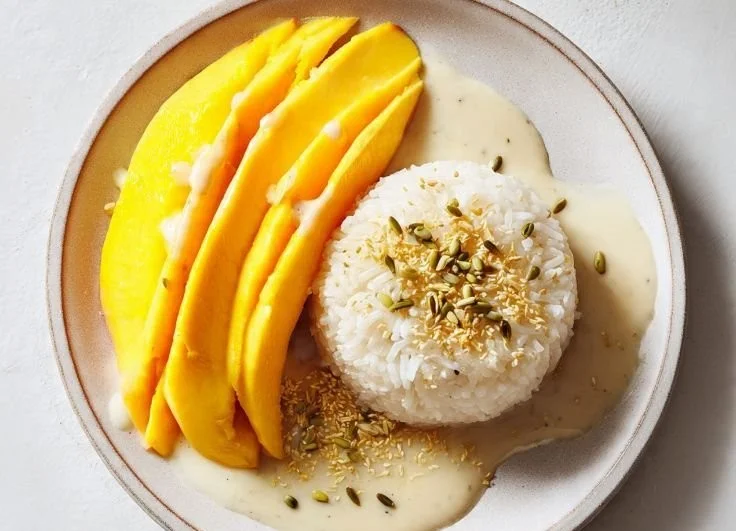
Mango Sticky Rice: A Tropical Comfort
There’s a reason mango sticky rice feels like a tiny tropical celebration on a plate. Picture warm, glossy pearls of glutinous rice—rich with coconut cream—nestled beside fragrant, honeyed mango slices. The aroma of simmered coconut and the mango’s bright, floral sweetness hit the senses first; the texture contrast between silky sauce, chewy rice, and buttery fruit follows, creating a bite that’s comforting and exciting at once. Making this dessert can feel like wrapping a warm memory: it’s simple, sensory, and generous.
This recipe is perfect for late-summer gatherings when mangoes are at their peak, festive dinners where you want an elegant but unfussy finish, or quiet weekend breakfasts that ask for something a little indulgent. If you like comforting rice dishes (try my take on a savory sibling, the cheesy hamburger rice casserole), you’ll find the same homestyle reassurance in this sweet version—only brighter and silkier.
At a Glance
- Prep Time: 10 minutes active (plus 4 hours–overnight soaking)
- Cook Time: 30–35 minutes (steaming + simmering sauce)
- Total Time: 4 hours 40 minutes (including soak) — 35–45 minutes hands-on
- Servings: 4
- Difficulty Level: Easy–Moderate (requires planning for soaking and steaming)
Nutrition Highlights
Estimated nutrition per serving (recipe yields 4 servings). These values are estimates calculated using USDA FoodData Central entries for glutinous rice, canned full-fat coconut milk, mango, and standard sugar/sesame-seed values; for general health guidance I referenced Mayo Clinic nutrition recommendations.
Per serving (approximate)
- Calories: 520–530 kcal
- Protein: ~5 g
- Total Carbohydrates: ~82 g
- Dietary Fiber: ~3–4 g
- Sugars: ~45–50 g (large portion from mangoes + added sugar)
- Total Fat: ~20 g
- Saturated Fat: ~18 g (from full-fat coconut milk)
- Sodium: ~200–300 mg (depends on added salt and coconut milk brand)
Notes on nutrition
- Coconut milk contributes most of the saturated fat and fat calories; using light coconut milk reduces total calories and saturated fat but will change texture and richness.
- Mango provides vitamins A and C, plus fiber; it accounts for much of the natural sugar and the dessert’s bright flavor.
- These are estimates for guidance only; for precise tracking consult foodspecific entries in USDA FoodData Central and consider packaging labels for your exact ingredients.
Why You’ll Love It
- Flavor & Texture: The interplay of creamy coconut and fragrant mango is irresistible—the rice absorbs coconut milk and becomes glossy and rich while mango adds fruity brightness and a silky contrast.
- Easy Host Win: It feels elevated but is mostly hands-off: soaking and steaming are forgiving steps, so you can prep sauce while the rice cooks.
- Nostalgia & Tradition: This is a classic Thai dessert that’s both celebratory and comforting—perfect for sharing family-style.
- Seasonal Joy: At mango season’s peak, the fresh fruit transforms simple rice into something summery and memorable.
Method & Process
Ingredients
- 1 cup glutinous (sweet) rice (also called sticky rice)
- 1 ½ cups full-fat coconut milk
- ⅓ cup granulated sugar
- ½ teaspoon salt
- 2 large ripe mangoes, peeled and sliced
- 1 tablespoon toasted sesame seeds
Optional ingredients and substitutions
- Use light coconut milk for lower calories (expect less richness).
- Replace granulated sugar with palm sugar or brown sugar for a deeper, caramel-like note.
- Add 1 tablespoon of toasted mung beans or crushed peanuts for crunch.
- For a vegan/dairy-free version: this recipe is already dairy-free; to reduce saturated fat use light coconut milk or a 50/50 mix of coconut milk and unsweetened almond milk (texture will be thinner).
Step-by-step Instructions
- Rinse the glutinous rice under cold water until the water runs mostly clear. This removes excess starch for a clean texture. Practical tip: use your hands and drain thoroughly.
- Soak the glutinous rice in plenty of water for at least 4 hours or overnight. This is essential for the proper chewy texture. (Do not skip soaking.)
- Drain the soaked rice and place it in a steamer lined with cheesecloth or a clean kitchen towel. Steam over simmering water for about 25–30 minutes, until the rice is tender and translucent. Tip: check doneness by tasting a small spoonful; it should be tender but not mushy.
- While the rice is steaming, combine 1 ½ cups coconut milk, ⅓ cup sugar, and ½ teaspoon salt in a small saucepan. Warm gently over low heat, stirring, until the sugar dissolves. Do not boil—heating gently preserves the coconut’s fragrance.
- When the rice is done, transfer it to a mixing bowl and stir in about 2/3 of the coconut milk mixture (reserve the rest for the topping). Work quickly but gently so you don’t overmix; you want the grains to be sticky but still slightly separate. Cover and let it sit for 10 minutes to absorb the coconut flavor.
- Return the reserved coconut milk to the saucepan and simmer gently until slightly thickened—this will become the finishing sauce. It should be glossy and pourable, not syrupy.
- Slice the mangoes into thin, even pieces. For presentation, cut one mango into fan slices and the other into wedges.
- To serve: plate a portion of sticky rice next to mango slices, drizzle with the thickened coconut sauce, and sprinkle with toasted sesame seeds.
Practical tips woven in:
- Avoid overmixing the rice after adding coconut milk—gentle folding preserves texture.
- If your coconut milk separates, whisk vigorously off heat to re-emulsify before simmering.
- Taste and adjust sugar—mango sweetness varies; if mangoes are super sweet, reduce added sugar by a tablespoon.
Presentation Tips
- Classic plating: Use a small mound of sticky rice (a lightly oiled measuring cup makes a nice shape), fan mango slices beside it, then drizzle coconut sauce across both.
- Casual serving: Scoop rice into small bowls and let guests top with mango and sauce themselves—great for potlucks.
- Pairings:
- A cup of jasmine tea or lightly brewed green tea balances the richness.
- For a brunch spread, serve alongside light yogurt, tropical fruit salad, or even a savory rice dish for contrast. Also try a playful dessert pairing inspired by holiday treats like the Christmas rice crispy treats for a fun-texture contrast.
Keeping it Fresh
Room temperature
- Best eaten the same day if left at room temperature; coconut milk increases spoilage risk. If kept covered in a cool spot, consume within a few hours (2–4 hours recommended).
Refrigeration
- Store leftovers in an airtight container in the refrigerator for up to 2 days. Note: the rice will firm up and the mango may lose some juiciness; gently reheat the rice with a splash of coconut milk to restore creaminess.
Freezer
- Freezing is not recommended for best texture: cooked glutinous rice becomes tough and mango texture degrades. If necessary, freeze the rice (no mango) in a tight container for up to 1 month and thaw in the refrigerator before reheating gently with a little coconut milk.
Insider Secrets
- Rice variety matters: use true glutinous (sticky) rice—regular long-grain or jasmine rice will not achieve the same chewiness.
- Toast sesame seeds or mung beans in a dry pan until fragrant—this small step adds depth.
- Heat control: never boil the coconut milk mixture; low heat dissolves the sugar and preserves the coconut aroma without splitting.
- Texture cue: properly cooked sticky rice should be tender throughout but with a slight chew—if it’s powdery in the center, steam a bit longer.
- Make ahead: you can steam rice and prepare the sauce earlier in the day; reheat rice by steaming or microwaving with a splash of coconut milk to rehydrate.
Creative Twists
- Tropical Crunch: Sprinkle toasted coconut flakes and crushed roasted peanuts or macadamia nuts on top for crunch and additional tropical flavor.
- Citrus-Kissed: Add 1 teaspoon of lime zest to the coconut sauce and a pinch of flaky sea salt to brighten flavors—lime pairs beautifully with mango.
- Less-Sweet / Lower-Fat: Use light coconut milk and reduce added sugar to 2–3 tablespoons; stir in 1 teaspoon of vanilla or ¼ teaspoon of cardamom for aromatic depth.
- Berry-Mango Fusion: Fold in a few sliced strawberries or raspberries for a color contrast and tangy counterpoint (best with firmer, less-syrupy mangoes).
Frequently Asked Questions
Q: Can I use regular jasmine rice instead of glutinous rice?
A: No—regular jasmine or long-grain rice won’t become sticky enough. Use glutinous (sweet) rice for the authentic chewy texture.
Q: How ripe should the mangoes be?
A: Choose mangoes that yield slightly to gentle pressure and smell sweet at the stem—overripe mangoes can be too soft and overly sweet, while underripe ones lack aromatic flavor.
Q: How do I fix rice that’s too hard or too mushy?
A: Too hard—steam a bit longer with a damp towel and a splash of water. Too mushy—reduce steaming next time and avoid adding too much coconut milk while mixing; scoop and serve immediately to minimize breakdown.
Q: Is this dessert vegan?
A: Yes—this traditional version is dairy-free and vegan when using plant-based coconut milk.
Q: Any healthier tweaks?
A: Use light coconut milk, reduce added sugar, or swap some sugar for a natural sweetener like a small amount of agave—be aware these change texture and sweetness balance.
Conclusion
This mango sticky rice recipe is a straightforward way to bring a bit of Thai dessert magic to your table—rich, fragrant, and delightfully textural. If you’d like to compare techniques or gather more inspiration from other cooks, check out Joyous Apron’s Mango Sticky Rice (a Thai dessert!) for a step-by-step community approach and Epicurious’s Mango Sticky Rice recipe for a classic, tested variation. Give this recipe a try, share your photos and tips, and join the conversation—there’s always a new twist waiting when friends and family gather around sweet rice and mango.
Print
Mango Sticky Rice: A Tropical Comfort
- Total Time: 270 minutes
- Yield: 4 servings 1x
- Diet: Vegan
Description
A delightful Thai dessert featuring sweet glutinous rice with rich coconut cream served alongside fresh mango slices.
Ingredients
- 1 cup glutinous (sweet) rice
- 1 ½ cups full-fat coconut milk
- ⅓ cup granulated sugar
- ½ teaspoon salt
- 2 large ripe mangoes, peeled and sliced
- 1 tablespoon toasted sesame seeds
Instructions
- Rinse the glutinous rice under cold water until the water runs mostly clear.
- Soak the glutinous rice in plenty of water for at least 4 hours or overnight.
- Drain the soaked rice and place it in a steamer lined with cheesecloth. Steam over simmering water for about 25–30 minutes.
- While the rice is steaming, combine coconut milk, sugar, and salt in a saucepan and warm gently until sugar dissolves.
- Once the rice is done, transfer it to a bowl and stir in 2/3 of the coconut milk mixture.
- Return reserved coconut milk to the saucepan and simmer until slightly thickened.
- Slice the mangoes and plate with sticky rice, drizzle with sauce, and sprinkle with sesame seeds.
Notes
For a lower calorie option, use light coconut milk and reduce sugar. If using different sweeteners, adjust based on sweetness.
- Prep Time: 240 minutes
- Cook Time: 30 minutes
- Category: Dessert
- Method: Steaming
- Cuisine: Thai
Nutrition
- Serving Size: 1 serving
- Calories: 525
- Sugar: 47g
- Sodium: 250mg
- Fat: 20g
- Saturated Fat: 18g
- Unsaturated Fat: 2g
- Trans Fat: 0g
- Carbohydrates: 82g
- Fiber: 3g
- Protein: 5g
- Cholesterol: 0mg