Captivating Introduction
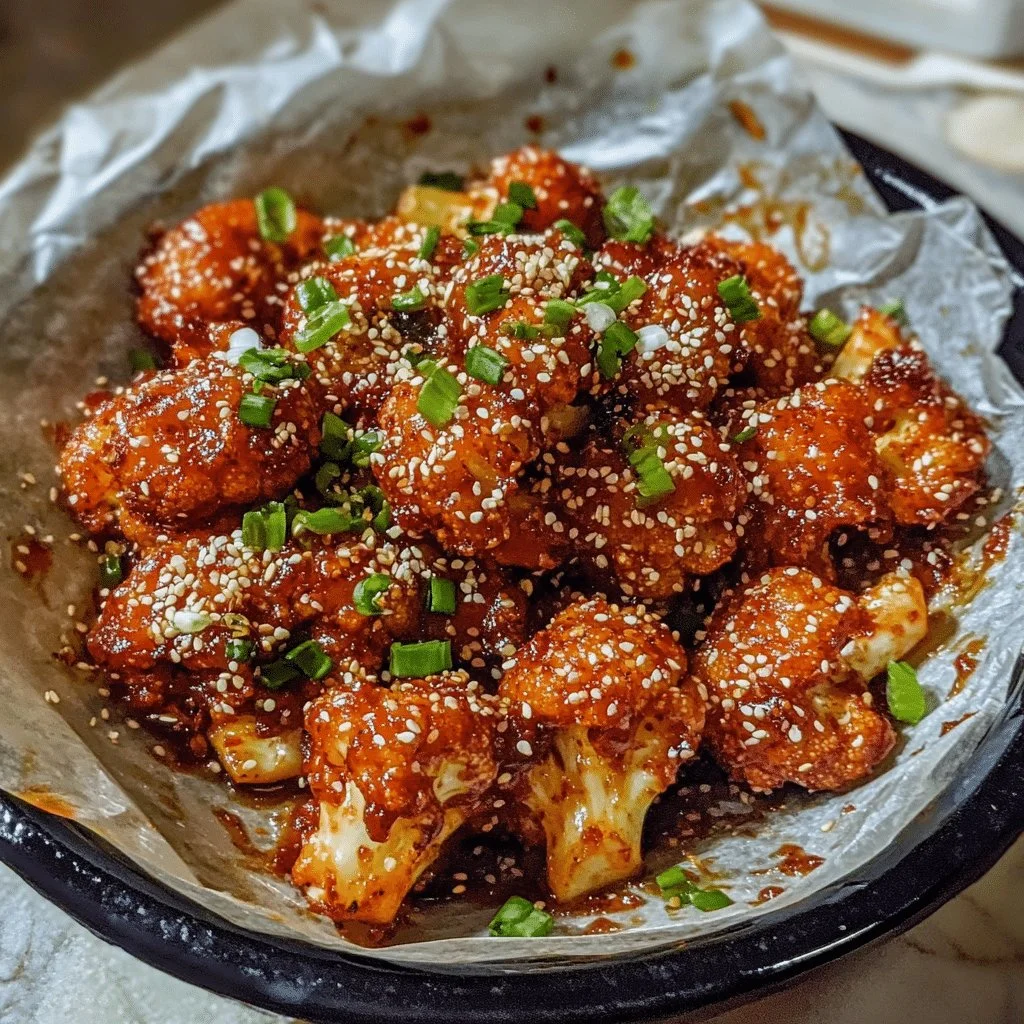
There’s something intoxicating about the moment the oven door opens: a warm, tangy steam lifts out, carrying toasted sesame and sweet-spicy gochujang aromas that make your kitchen feel instantly alive. Korean Baked Cauliflower takes humble florets and transforms them into crispy-edged, glossy bites — tender inside, lacquered outside, and brightened by scattered green onion and sesame seeds. The first forkful hits with a gentle caramelized crunch, then a savory-sweet heat that lingers and invites another.
This recipe is perfect for weeknight dinners when you want big flavor with minimal fuss, for appetizers at a casual gathering where people graze and chat, and even for cozy solo meals over steaming rice or noodles. It’s also an excellent plant-forward option during festive seasons when you want something colorful and a little bit unexpected on the table. If you enjoy oven-baked treats with balance and texture, you might also like a sweeter companion like my oven-baked dessert, the baked apple crumble, which pairs well with the same comforting oven-roasting technique: baked apple crumble recipe.
Dish Snapshot
- Prep Time: 10 minutes
- Cook Time: 30–35 minutes (25–30 minutes roasting + optional 5 minutes glazing)
- Total Time: 40–45 minutes
- Servings: 4 (as a side or appetizer)
- Difficulty Level: Easy — great for cooks of all levels
Nutrition Highlights
Estimated nutrition per serving (one-quarter of the recipe). Values are approximate and calculated from USDA FoodData Central ingredient averages and standard package nutrition notes; for health guidance see CDC and Mayo Clinic resources.
- Calories: ~175 kcal
- Protein: ~4 g
- Carbohydrates: ~16 g
- Fat: ~11 g
- Fiber: ~4 g
- Sugar: ~6 g
- Sodium: ~550 mg
Notes: sodium is driven mainly by the soy sauce and gochujang — adjust to taste or swap low-sodium soy sauce/tamari to reduce sodium. These figures are estimates; if you need precise values for medical reasons, weigh your ingredients and consult nutrition databases like the USDA FoodData Central.
Why You’ll Love It
- Bold, balanced flavor: the combination of gochujang, sesame oil, and honey/maple delivers sweet, savory, umami, and a touch of heat in every bite.
- Textural play: edges caramelize to crispness while the cauliflower stays tender inside — a satisfying contrast.
- Crowd-pleasing flexibility: serve it as a fiery appetizer on skewers, a side to grilled meats, or a main over rice or noodles for plant-forward dinners.
- Quick and approachable: minimal prep, straightforward roasting, and an easy sauce that comes together in minutes.
- Health-forward: cauliflower offers fiber and vitamins while this recipe keeps calories moderate when shared as a side.
How to Make Korean Baked Cauliflower
Ingredients
- Cauliflower: 1 large head, cut into florets
- Olive oil: 2 tablespoons
- Salt: 1/2 teaspoon
- Black pepper: 1/2 teaspoon
Sauce
- Gochujang (Korean red chili paste): 2 tablespoons
- Soy sauce: 2 tablespoons
- Sesame oil: 1 tablespoon
- Honey or maple syrup: 1 tablespoon
- Rice vinegar: 1 teaspoon
- Garlic cloves, minced: 2
- Fresh ginger, grated: 1 teaspoon
Garnish
- Toasted sesame seeds: 1 teaspoon
- Green onions, sliced: 2
Optional ingredients and substitutions
- Make vegan: use maple syrup instead of honey and ensure your gochujang is vegan-friendly.
- Gluten-free: swap soy sauce for tamari or gluten-free soy sauce.
- Extra heat: add gochugaru or a pinch of cayenne.
- To increase crispiness: toss florets with 1–2 teaspoons cornstarch before roasting.
Step-by-step Instructions
- Preheat oven to 400°F (200°C). Line a baking sheet with parchment paper or lightly oil it.
- Toss cauliflower florets with olive oil, salt, and pepper in a large bowl until evenly coated. Spread in a single layer on the baking sheet — don’t overcrowd, or they’ll steam instead of roast.
- Roast for 25–30 minutes, flipping halfway, until florets are golden brown and the edges are crisp. Check doneness by piercing a large floret with a fork; it should be tender but not mushy.
- Meanwhile, whisk the gochujang, soy sauce, sesame oil, honey (or maple), rice vinegar, minced garlic, and grated ginger in a small bowl until smooth.
- (Optional) For a thicker, more glossy sauce, simmer the sauce in a small saucepan over medium heat for 3–5 minutes, stirring, until slightly reduced. Allow to cool briefly.
- Remove roasted cauliflower from the oven and either drizzle the sauce over the tray and toss gently to coat, or transfer cauliflower to a bowl and toss with the sauce. Spread back on the baking sheet and return to the oven for 5 minutes if you like a more caramelized glaze.
- Garnish with toasted sesame seeds and sliced green onions. Serve hot.
Practical tips
- Dry florets roast better: pat cauliflower dry after washing to avoid soggy results.
- Single layer is crucial: use two trays if needed.
- Avoid overmixing when tossing with sauce — gentle tugs preserve the roast.
- If you’re curious about timing and temperature for other baked dishes, see my method notes in this protein-focused baked eggs guide: baked cottage cheese and eggs timing tips.
Best Pairings
- Serve over steamed white or brown rice or with garlic noodles for a main-course bowl.
- As an appetizer: plate with toothpicks and a small bowl of extra sauce or cool soy-mayo dip.
- Make it part of a Korean-inspired spread with kimchi, pickled cucumbers, and steamed rice.
- For a brunch twist: top soft-poached eggs and serve with toasted sesame and scallions. If you like savory baked brunch ideas, see my savory baked breakfast guide for inspiration: savory baked cottage cheese and eggs.
Presentation tips
- Stack florets in a shallow mound on a white plate, drizzle any remaining sauce, and finish with a shower of sesame seeds and scallions for contrast.
- Add a wedge of lime for those who prefer a bright citrus lift.
How to Store
- Room temperature: Do not leave cooked cauliflower at room temperature for more than 2 hours (per standard food-safety guidance).
- Refrigeration: Store in an airtight container for 3–4 days. Reheat in a 350°F (175°C) oven for 8–10 minutes to revive crispness or in a skillet over medium heat.
- Freezer: Freeze in a single layer on a tray, then transfer to a freezer-safe bag or container for up to 2 months. Note: texture softens after freezing and reheating; best eaten within 1–2 months for quality.
Chef’s Advice
- For maximum crisp: after cutting, let florets air-dry on a towel for 15–20 minutes; moisture is the enemy of crispness.
- Use a hot oven and preheated sheet if you want instant sizzle and better browning.
- If you prefer a stickier glaze, add a teaspoon of cornstarch mixed with a tablespoon of water to the sauce and simmer briefly.
- Taste your gochujang before adding — brands vary in heat and sweetness. Adjust honey/maple and vinegar to balance.
- Rotate the pan once during roasting for even browning; dark pans brown faster.
Creative Twists
- Sticky BBQ Korean Cauliflower: Replace half the soy sauce with low-sugar BBQ sauce and add 1 teaspoon smoked paprika for a smoky-sweet finish.
- Air-Fryer Crunch: Roast at 375°F (190°C) in the air-fryer for 15–18 minutes, shaking halfway, for an even crispier texture.
- Protein Boost Bowl: Toss with crispy baked tofu cubes or tempeh and serve over brown rice with sautéed greens for a complete meal.
- Milder, Yogurt-Dressed Version: After roasting, toss with a mixture of plain Greek yogurt, a spoonful of the sauce, and minced cucumber for a cooling twist.
- Sesame-Ginger Crunch: Add toasted almonds or pepitas and extra grated ginger for an aromatic crunch.
Recipe Q&A
Q: Can I use frozen cauliflower?
A: Yes — but thaw, pat very dry, and roast at a slightly higher temperature. Texture won’t be as crisp as fresh.
Q: What can I use instead of gochujang?
A: Mix 1 tablespoon of miso or chili paste with 1 teaspoon of soy sauce and 1 teaspoon honey as a quick sub. The flavor will be different but still savory-sweet.
Q: How do I make it less spicy?
A: Reduce the gochujang to 1 tablespoon and increase honey/maple to 1.5 tablespoons, or use a mild chili paste.
Q: Can I make this ahead?
A: Roast the cauliflower and keep the sauce separate; toss and reheat right before serving to preserve crispness.
Q: How do I re-crisp leftovers?
A: Reheat in a preheated 350°F oven or in a skillet with a tiny splash of oil until edges re-crisp.
Conclusion
I hope this Korean Baked Cauliflower recipe becomes a new favorite — it’s a simple, bold-flavored dish that’s easy to scale and endlessly adaptable. If you’d like to explore other takes on Korean-style baked cauliflower, take a look at Chez Jorge’s Korean Baked Cauliflower and the sweet-spicy variation at Blossom to Stem’s Sweet and Spicy Korean Cauliflower. Try it, tweak it, and share a photo — I’d love to see how you make it your own.