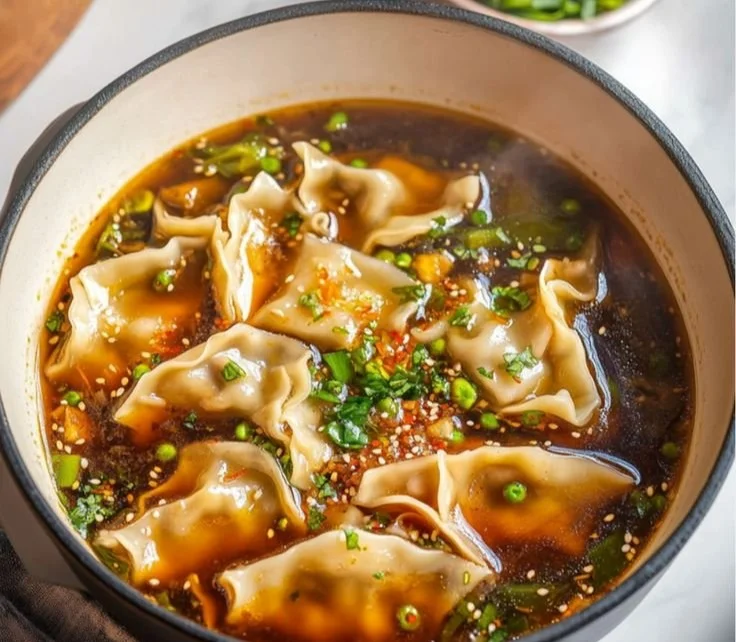
Potsticker Soup
There’s something magical about a steaming bowl of potsticker soup: the heady aroma of ginger and toasted sesame oil, the pillowy chew of dumpling wrappers giving way to savory fillings, and the gentle snap of bright greens. It’s comfort with a little crunch and a lot of soul — the kind of dish that warms hands and conversations alike.
This recipe is perfect for quick weeknight dinners, when a single pot needs to feed hungry people fast; for casual gatherings, where guests can grab a warm cup and dip into conversation; and for rainy days when you want immediate comfort without hours of fuss. If you enjoy exploring regional takes or want more make-ahead tips, see this hearty potsticker soup guide for additional inspiration.
At a Glance
- Prep Time: 10 minutes
- Cook Time: 8–12 minutes (depends on frozen vs. fresh potstickers)
- Total Time: 20 minutes
- Servings: 4 bowls (about 2 cups per person)
- Difficulty Level: Easy — ideal for cooks of any skill level
Nutritional Breakdown
The following nutrition profile is an estimate per serving (recipe yields 4 servings) based on common ingredient averages and government food composition data (USDA FoodData Central) and reflects typical frozen pork/vegetable potstickers and salted chicken/vegetable broth. Individual results will vary based on exact brands and portion sizes.
- Calories: ~240 kcal
- Protein: ~9 g
- Carbohydrates: ~22 g
- Fat: ~10 g
- Saturated Fat: ~2.5 g
- Fiber: ~1.5 g
- Sodium: ~900–1100 mg (varies widely; use low-sodium broth/soy sauce to reduce)
Notes on accuracy and health: these values are approximate and derived from USDA food composition averages; for those monitoring sodium or calories closely, choose low-sodium broth and reduced-sodium soy sauce and check product labels. For general health guidance on sodium and portioning, refer to resources such as the CDC and Mayo Clinic.
Why You’ll Love It
- Aroma-first impact: The first breath you take is ginger and garlic warmed in sesame oil — a sensory invitation that says “sit down.”
- Speed without sacrificing comfort: Ready in about 20 minutes from start to finish; perfect when time is short but you want homemade satisfaction.
- Crowd-pleaser with nostalgia: Potstickers often evoke family dinners and takeout nights; this soup turns that memory into a shareable bowl.
- Adaptable & balanced: Add more greens for fiber, swap potstickers for vegetarian versions, or use low-sodium broth for a lighter meal. It’s a flexible canvas that suits seasons and diets.
Preparation Guide
Ingredients
- 12 potstickers (about 1 lb / 450 g; fresh or frozen)
- 4 cups (960 ml) chicken or vegetable broth (low-sodium recommended)
- 2 cloves garlic, minced
- 1-inch piece fresh ginger, grated (about 1 tsp grated)
- 2 cups greens (bok choy, baby spinach, or napa cabbage), roughly chopped
- 2 green onions, thinly sliced (reserve some white and green parts for garnish)
- 1 tablespoon soy sauce, or to taste (use reduced-sodium if desired)
- 1 teaspoon sesame oil
- Salt and freshly ground black pepper, to taste
Optional ingredients and substitutions
- Protein swap: Use 12 vegan potstickers (tofu & vegetable) for a meat-free bowl.
- Gluten-free: Look for gluten-free wrappers/dumplings or make your own wrappers with rice-flour dough (store-bought gluten-free potstickers recommended).
- Extra flavor: 1 tablespoon rice vinegar or 1 teaspoon chili oil per bowl.
- Miso twist: Stir 1 tablespoon miso paste into each bowl for depth (add after soup is off the heat).
Step-by-step Instructions
- In a large pot, heat 1 teaspoon sesame oil over medium heat.
- Add the minced garlic and grated ginger; sauté 1–2 minutes until fragrant but not browned. Tip: watch closely — garlic burns quickly and becomes bitter.
- Pour in 4 cups of broth and bring to a gentle simmer.
- Add the potstickers to the simmering broth. If using frozen potstickers, do not thaw first — add straight from the freezer. Cook according to package directions, usually 6–8 minutes for frozen, or 3–5 minutes for fresh. Stir gently to prevent sticking.
- Stir in the greens and cook until just wilted (about 1–2 minutes). Smaller leaves like spinach will take less time than bok choy.
- Season with soy sauce, salt, and pepper to taste. Adjust to your preference.
- Serve hot, garnished with sliced green onions and a drizzle of sesame oil or chili oil if desired.
Practical tips
- Don’t over-stir after adding potstickers; gently move them once or twice so wrappers don’t tear.
- Test one dumpling for doneness: cut it open—meat should be fully cooked and broth bubbling.
- If using frozen potstickers, ensure the broth returns to a steady simmer after adding them for even cooking.
- Want extra body? Add a whisked egg slowly into simmering broth for an egg-drop texture.
For other comforting one-pot ideas (like a slow-cooker twist on a favorite), consider this slow-cooker chicken parm soup inspiration.
Best Pairings
- Light sides: A small cucumber salad or pickled radish cuts through richness.
- Rice or noodles: Serve over a scoop of steamed jasmine rice or cooked soba for heartier bowls.
- Beverages: Jasmine or oolong tea complements the ginger and sesame; a crisp lager or dry Riesling pairs well if you prefer wine.
- Garnishes: Toasted sesame seeds, a sprinkle of crushed red pepper, or a splash of toasted sesame oil elevate presentation and aroma.
How to Store
- Room temperature: Do not leave the soup at room temperature for more than 2 hours (per USDA food safety guidelines).
- Refrigeration: Store in an airtight container for 3–4 days. Note: dumpling wrappers may soften over time; reheat gently to avoid them falling apart.
- Freezer: The soup can be frozen for up to 2 months for best quality. Freeze without delicate greens (add fresh greens when reheating). Potstickers sometimes become chewier after freezing—flash-freezing them separately on a tray before bagging helps preserve texture.
Reheating guidance: Reheat gently on the stove over medium-low heat until steaming, adding a splash of broth or water if the soup has thickened. Microwaving is fine for single servings—heat in 30-second intervals.
Insider Secrets
- Choose potstickers with thicker wrappers for soup: they hold up better and keep a pleasant chew after simmering.
- Toast your sesame oil lightly in the pan before adding garlic — this deepens its nutty aroma (watch carefully; it browns fast).
- If you like a clearer broth, simmer gently and avoid a rolling boil after adding potstickers. Aggressive boiling can tear wrappers and cloud the broth.
- Brighten the bowl with acid: a tiny squeeze of lime or a teaspoon of rice vinegar just before serving lifts flavors dramatically.
- Avoid adding delicate herbs too early—cilantro or Thai basil should be reserved for finishing to retain their brightness.
Creative Twists
- Vegan & umami-forward: Use vegetable broth, vegan dumplings (mushroom & tofu), and finish with a tablespoon of miso paste for savory depth.
- Spicy Szechuan: Add 1 teaspoon chili crisp or 1 tablespoon Szechuan pepper + chili oil, and a splash of black vinegar for heat and tang.
- Coconut-ginger twist: Replace half the broth with light coconut milk and add a thin slice of lemongrass; pair with shrimp or chicken potstickers for a Southeast Asian turn.
- Noodle bowl upgrade: Add cooked udon or ramen noodles to transform the soup into a more filling single-bowl meal.
All Your Questions Answered
Q: Can I use frozen potstickers straight from the freezer?
A: Yes — add them directly to simmering broth and cook according to package directions (add a few minutes compared to fresh).
Q: My potstickers fall apart in the soup. How can I prevent that?
A: Use gentler simmering (not a rolling boil), avoid excessive stirring, and choose dumplings with sturdier wrappers. Fresh potstickers often hold up better than thin, store-bought varieties.
Q: How can I reduce sodium?
A: Use low-sodium broth, reduced-sodium soy sauce, and taste before adding extra salt. Fresh aromatics like ginger and lime add flavor so you can rely less on salt.
Q: Is there a healthy version?
A: Absolutely — use vegetable broth, lean protein or veggie potstickers, more greens, and opt for minimal oil. Lower-sodium components make it heart-healthier (see CDC guidance on sodium limits).
Q: Leftover ideas?
A: Turn leftovers into a grain bowl with rice and fresh herbs, or crisp leftover potstickers in a skillet and serve alongside reheated broth as a two-part meal.
Conclusion
I hope this potsticker soup recipe becomes a go-to for cozy nights and busy evenings when you need something fast, flavorful, and comforting. For extra inspiration, check these well-tested recipes and variations from other cooks to compare techniques and get new ideas: Gimme Some Oven’s potsticker soup recipe, Skinnytaste’s quick 30-minute potsticker soup, and For the Love of Gourmet’s potsticker soup. If you make this, I’d love to hear how you customized it—share a photo or comment and join our little community of soup lovers.