
Best Beef Stew in Red Apple Vinegar Sauce
There’s a moment when the kitchen fills with the scent of seared beef, warm caramelized onions, and a bright, tangy apple-vinegar steam that lifts the whole room. This Best Beef Stew in Red Apple Vinegar Sauce is exactly that — deep, savory braised beef with a lively red-apple vinegar lift that keeps each spoonful balanced and irresistible. Imagine tender fork-flake beef bathing in a glossy, slightly sweet-and-tart sauce, with soft carrots and potatoes that soak up every last drop. The texture is luxurious: silky sauce, melt-in-your-mouth beef, and the gentle give of root vegetables.
This stew is an emotional kitchen hug: perfect for slow Sunday suppers, chilly weeknight dinners when you want something comforting without fuss, or when hosting friends who appreciate rustic, soulful food. Serve it at holiday tables for a less conventional but unforgettable centerpiece, or make a double batch and enjoy it all week — it even tastes better the next day. If you like pairing savory mains with homemade breads, try this great accompaniment I love for casual mornings or savory snacks: 3-ingredient poppy seed bagels — they’re surprisingly quick and lovely alongside a bowl of stew.
Dish Snapshot
- Prep Time: 30 minutes (active)
- Cook Time: 4 hours (includes braise and finishing time)
- Total Time: 4 hours 30 minutes
- Servings: 8 generous bowls
- Difficulty Level: Moderate (requires browning and long, slow braise)
Nutrition Highlights
Estimated nutrition per serving (1 of 8). These are approximations based on USDA FoodData Central averages and general nutrition guidance from authoritative sources such as the USDA and Mayo Clinic; actual values will vary with brands and exact trimming/portion sizes.
- Calories: ~580 kcal
- Protein: ~46 g
- Total Fat: ~36 g
- Saturated Fat: ~12 g
- Total Carbohydrates: ~25 g
- Fiber: ~2.5 g
- Sugars: ~6–8 g (includes added sugar and natural sugars)
- Sodium: ~775 mg (varies widely with stock and added salt)
- Vitamin/mineral notes: Good source of iron and B12 from beef; vitamin A from carrots; potassium from potatoes.
Notes: These values account for 3 lb beef chuck, olive oil, vegetables, stock, vinegar, and the other ingredients in the recipe. If you want to lower calories/fat, choose a leaner cut of beef, reduce the olive oil, or remove excess surface fat after cooling. For detailed breakdowns, see USDA FoodData Central and guidance from the Mayo Clinic.
Why You’ll Love It
This stew hits several sweet spots. The bright cherry of red apple vinegar cuts through the beef’s richness, preventing the dish from feeling heavy while amplifying savory notes. It’s emotionally comforting — the kind of dish that becomes a family tradition — and it scales easily for gatherings. It’s also forgiving in the kitchen: most of the effort is in the initial sear and a patient simmer, so it’s low-stress once it’s on the stove. Seasonally, it’s exceptional in fall and winter when you crave a bowl that warms from the inside out.
How to Make Best Beef Stew in Red Apple Vinegar Sauce
Ingredients
- 3 pounds boneless beef chuck, cut into 1½–2 inch cubes
- 2 teaspoons salt (plus more to taste)
- 1 teaspoon black pepper, freshly ground
- 3 tablespoons olive oil
- 2 medium yellow onions, chopped
- 7 cloves garlic, crushed
- 2 tablespoons balsamic vinegar
- 1½ tablespoons tomato concentrate (tomato paste)
- 2 tablespoons all-purpose flour
- 2 cups dry red apple vinegar
- 2 cups beef stock (low-sodium preferred)
- 2 cups water
- 1 bay leaf
- ½ teaspoon dried thyme (or 1½ tsp fresh thyme leaves)
- 1½ teaspoons granulated sugar
- 4 large carrots, peeled and sliced on the bias
- 1 pound small white potatoes, halved or quartered depending on size
Optional ingredients and substitutions
- Substitute 2 cups low-sodium beef broth for stock + water if preferred.
- Use 2 tablespoons cornstarch mixed with cold water to thicken at the end (gluten-free) instead of flour.
- Replace 3 tbsp olive oil with 3 tbsp neutral oil (canola) or use 2 tbsp butter for a richer flavor.
- If you prefer a less vinegary tang, reduce red apple vinegar to 1½ cups and add an extra ½ cup beef stock.
Method & Process
- Pat the beef cubes dry and season evenly with 2 teaspoons salt and 1 teaspoon black pepper.
- In a heavy-duty pot (Dutch oven is ideal), heat 3 tablespoons olive oil over medium-high heat until shimmering.
- Sear the beef in batches to avoid overcrowding: brown on all sides, about 3–4 minutes per batch. Transfer browned beef to a plate and set aside.
- In the same pot, reduce heat to medium and add the chopped onions. Sauté until softened and golden, about 6–8 minutes. Add crushed garlic and cook 1 minute more until fragrant.
- Stir in 2 tablespoons balsamic vinegar and 1½ tablespoons tomato concentrate; let them cook briefly (about 1 minute) to deepen flavors.
- Sprinkle 2 tablespoons flour over the onion mixture and stir to combine; cook 1 minute to remove raw flour taste.
- Gradually pour in 2 cups red apple vinegar while scraping up browned bits from the pot bottom with a wooden spoon.
- Return the seared beef to the pot. Add 2 cups beef stock, 2 cups water, 1 bay leaf, ½ teaspoon thyme, and 1½ teaspoons sugar. Bring to a boil.
- Once boiling, reduce heat to low, cover tightly, and simmer gently for about 3 hours, stirring occasionally, until beef is very tender.
- Add sliced carrots and halved potatoes to the pot, cover, and continue to simmer for an additional hour until vegetables are tender and sauce has thickened slightly.
- Taste and adjust seasoning (salt, pepper, a touch more sugar or vinegar if needed). Remove bay leaf before serving.
Practical tips
- Avoid overcrowding the pan when searing; browning adds depth of flavor.
- If the sauce is too thin after simmering, uncover and simmer briskly for 10–15 minutes to reduce, or mix 1 tbsp cornstarch with 2 tbsp cold water and stir it in to thicken.
- Check doneness by testing a piece of beef with a fork — it should fall apart easily when done.
- Letting the stew rest (or refrigerating overnight) often improves flavor as the acids mellow and the meat reabsorbs sauce.
Presentation Tips
- Serve this stew in deep bowls with a spoonful of sauce spooned over the top so the glossy vinegar-reduced braise gleams.
- Garnish with a sprinkle of chopped fresh parsley or thyme for color and brightness.
- Offer crusty bread or dumplings at the side to mop up the sauce, and a simple raw green salad to cut richness. For a fun, cozy serving suggestion that pairs beautifully with braised dishes, consider serving slices of a tender sweet bread like banana bread caramel swirl as an unexpected sweet-savory accomplice.
Shelf Life & Storage
- Room temperature: Do not store stew at room temperature for more than 2 hours total (per food safety guidelines).
- Refrigerator: Store in airtight containers for up to 3–4 days. Cool to room temperature (no more than 2 hours) before refrigerating.
- Freezer: Freeze for 2–3 months for best quality. Use freezer-safe containers, leaving an inch of headspace. Thaw in the refrigerator overnight before reheating.
To reheat: Gently warm on the stove over low heat, stirring occasionally, until simmering. Add a splash of beef stock or water if the sauce has thickened excessively in the fridge.
Expert Tips
- Best cuts: Chuck is ideal because its marbling yields tender, flavorful beef after long braising. For leaner options, brisket or bottom round will work but may be slightly less rich.
- Fat control: After chilling, you can remove a firm layer of fat from the top to reduce saturated fat while keeping flavor.
- Doneness cues: Beef should be fork-tender and easy to pull apart; if it’s still tough, continue simmering rather than increasing heat — low and slow breaks down collagen into gelatin.
- Flavor balance: The red apple vinegar is the star. Taste during finishing and add a small pinch of sugar or a splash of balsamic to smooth edges if it tastes too sharp.
- Texture of vegetables: Add carrots and potatoes later (as the recipe indicates) to prevent them from turning to mush.
Creative Twists
- Flemish-style twist: Add 1–2 tablespoons of dark beer (stout or Belgian brown) along with the vinegar for a deep, malty accent — inspired by traditional Carbonnade Flamande. (Adapt to taste; reduce some stock if you add beer.)
- Vegetarian version: Replace beef with large portobello mushrooms and extra-firm marinated tofu; use vegetable stock and add 2 tablespoons soy sauce for umami, simmering until mushrooms are tender.
- Gluten-free option: Use cornstarch slurry instead of flour to thicken; ensure stock and tomato paste are gluten-free.
- Smoky variation: Stir in 1 teaspoon smoked paprika or a splash of liquid smoke for a subtly smoky finish.
Frequently Asked Questions
Q: Can I use a slow cooker or Instant Pot?
A: Yes. For slow cooker: after searing beef and sautéing onions, transfer everything to the slow cooker and cook on low for 6–8 hours. For Instant Pot: use the Sauté function for searing, then cook on Manual/High pressure for ~45 minutes with a natural release.
Q: My sauce is too thin — how do I thicken it?
A: Reduce uncovered over medium-high heat until it concentrates, or whisk 1–2 tablespoons cornstarch with cold water and stir in, simmering 2–3 minutes until thickened.
Q: Can I make this ahead?
A: Absolutely. It often tastes better the next day; refrigerate overnight and reheat gently. Freeze portions for later meals.
Q: How can I make it lower in sodium?
A: Use low-sodium beef stock and reduce added salt. Taste before adding the final salt.
Q: What can I do with leftovers?
A: Leftover stew makes an excellent filling for savory pies, shepherd’s-pie-style bakes, or mixed with cooked pasta for a hearty pasta ragù.
Conclusion
This Best Beef Stew in Red Apple Vinegar Sauce is a cozy, flavor-forward dish that rewards patience and tastes even better over time. If you enjoy exploring braised beef traditions, Stephanie Izard’s take on a winter stew offers inspiring technique and flavor notes that pair well with this recipe: Never-Ending Chicago Winter Beef Stew. For another Flemish-inspired angle and ideas on braising with rich, sweet flavors, this Carbonnade Flamande adaptation is an excellent reference: Carbonnade Flamande (Flemish Beef Stew) For Instant Pot or Slow.
Give this stew a try, share your photos and notes in the comments, and tell us which variation became your favorite — I love hearing how these recipes find their way into your family table.
Print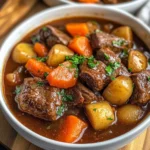
Best Beef Stew in Red Apple Vinegar Sauce
- Total Time: 270 minutes
- Yield: 8 servings 1x
- Diet: None
Description
A comforting beef stew with seared beef, caramelized onions, and a tangy red apple vinegar sauce, perfect for chilly evenings and family gatherings.
Ingredients
- 3 pounds boneless beef chuck, cut into 1½–2 inch cubes
- 2 teaspoons salt (plus more to taste)
- 1 teaspoon black pepper, freshly ground
- 3 tablespoons olive oil
- 2 medium yellow onions, chopped
- 7 cloves garlic, crushed
- 2 tablespoons balsamic vinegar
- 1½ tablespoons tomato concentrate (tomato paste)
- 2 tablespoons all-purpose flour
- 2 cups dry red apple vinegar
- 2 cups beef stock (low-sodium preferred)
- 2 cups water
- 1 bay leaf
- ½ teaspoon dried thyme (or 1½ tsp fresh thyme leaves)
- 1½ teaspoons granulated sugar
- 4 large carrots, peeled and sliced on the bias
- 1 pound small white potatoes, halved or quartered depending on size
Instructions
- Pat the beef cubes dry and season evenly with salt and black pepper.
- In a heavy-duty pot, heat olive oil over medium-high heat until shimmering.
- Sear the beef in batches, browning on all sides, about 3–4 minutes per batch. Transfer browned beef to a plate.
- Reduce heat to medium, add chopped onions, and sauté until softened and golden, about 6–8 minutes.
- Add crushed garlic and cook for 1 minute until fragrant.
- Stir in balsamic vinegar and tomato concentrate, cooking briefly for 1 minute.
- Sprinkle flour over the mixture, stirring to combine and cooking for another minute.
- Gradually pour in red apple vinegar while scraping up browned bits from the pot.
- Return the seared beef to the pot, and add beef stock, water, bay leaf, thyme, and sugar. Bring to a boil.
- Once boiling, reduce heat to low, cover tightly, and simmer for about 3 hours until beef is very tender.
- Add sliced carrots and halved potatoes, cover, and continue to simmer for an additional hour until vegetables are tender.
- Taste and adjust seasoning, and remove bay leaf before serving.
Notes
If you prefer less vinegar tang, reduce red apple vinegar to 1½ cups and add an extra ½ cup beef stock. Beef chuck is ideal for tenderness after long braising.
- Prep Time: 30 minutes
- Cook Time: 240 minutes
- Category: Main Course
- Method: Braising
- Cuisine: American
Nutrition
- Serving Size: 1 bowl
- Calories: 580
- Sugar: 8g
- Sodium: 775mg
- Fat: 36g
- Saturated Fat: 12g
- Unsaturated Fat: 18g
- Trans Fat: 0g
- Carbohydrates: 25g
- Fiber: 2.5g
- Protein: 46g
- Cholesterol: 80mg