Chicken Teriyaki Noodles
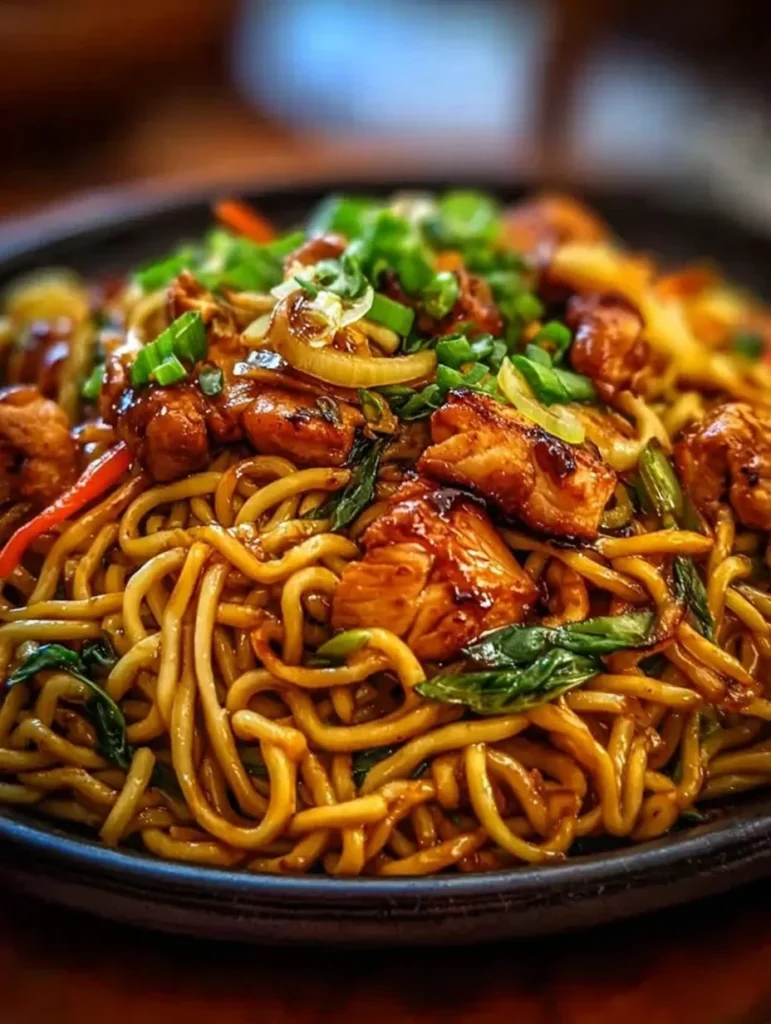
There’s a moment when the kitchen fills with the sweet-salty perfume of caramelized soy and warm honey, when steam curls off a pan and the noodles glisten with glossy sauce — that’s the feeling this Chicken Teriyaki Noodles recipe delivers. Tender bites of chicken, slightly crisp red pepper, a hint of bright ginger and the soft, springy chew of mie noodles come together in a bowl that comforts and excites at the same time. It’s the kind of dish that feels like a warm hug after a long day and tastes like a small celebration.
This recipe is perfect for weeknight dinners when you want fast, satisfying comfort; for casual gatherings where everyone can help themselves; and for meal-prep lunches that reheat beautifully. If you enjoy teriyaki-style bowls, you might also appreciate a different twist on the theme like this teriyaki turkey rice bowl, which swaps rice and protein for a lighter take.
At a glance
- Prep Time: 10 minutes (plus a few minutes to grate ginger)
- Cook Time: 12–15 minutes
- Total Time: 25 minutes
- Servings: 4
- Difficulty Level: Easy / Weeknight-friendly
Nutrition Highlights
Below is an approximate nutritional breakdown per serving (recipe yields 4 servings). Values are estimates calculated from typical ingredient profiles and rounded for clarity. Nutrition values are based on USDA FoodData Central averages and general nutrition guidelines; for personal dietary needs consult a registered dietitian or resources such as the CDC or Mayo Clinic.
Per serving (approx.):
- Calories: 510 kcal
- Protein: 39 g
- Carbohydrates: 58 g
- Fat: 12 g
- Fiber: 3–4 g
- Sodium: Moderate to high (largely from soy sauce) — consider lower-sodium soy if limiting salt
Notes: Totals include 400 g chicken breast, 250 g dry mie noodles, 6 tbsp soy sauce, 2 tbsp honey, 2 tbsp vegetable oil, one red pepper and one small onion. Honey contributes notable sugar/carbs. If you need stricter nutrition values, weigh finished portions and use a nutrition calculator or database.
Why You’ll Love It
- Irresistible balance: The sauce’s sweet-salty-gingery notes cling to tender chicken and noodles for a crowd-pleasing flavor profile.
- Speed without sacrifice: Ready in under 30 minutes — ideal for busy evenings and hungry families.
- Comfort + freshness: Warm noodles and caramelized sauce meet bright, crisp peppers for texture contrast.
- Flexible: Easily adapted to be lighter, plant-based, gluten-free, or spicier depending on mood or dietary needs.
- Social: Great for sharing — fills bowls quickly at informal dinners or potlucks.
How to Make Chicken Teriyaki Noodles
Ingredients
- 400 g Hähnchenbrustfilet
- 250 g Mie-Nudeln (dry)
- 6 EL Sojasauce (dunkel)
- 2 EL Honig (oder brauner Zucker)
- 1 rote Paprika
- 1 kleine Zwiebel
- 2 EL Pflanzenöl (z.B. Sonnenblumen- oder Erdnussöl)
- 1 Stück Ingwer (ca. 2 cm, frisch gerieben)
Optional ingredients and substitutions:
- For a gluten-free version: use tamari or a gluten-free soy sauce and rice noodles instead of mie.
- For vegan: swap chicken for 350–400 g firm tofu (press and cube) — see this tofu teriyaki bento box for further vegan teriyaki ideas.
- Additions: sliced green onions, toasted sesame seeds, a splash of rice vinegar or a pinch of chili flakes for heat.
- Sweetener swap: brown sugar or maple syrup for honey.
Step-by-step instructions
- Step 1: Die Mie-Nudeln nach Packungsanweisung in kochendem Wasser garen. Anschließend abgießen, kurz mit kaltem Wasser abschrecken, damit sie nicht zusammenkleben, und beiseitestellen.
- Step 2: Das Hähnchenbrustfilet in mundgerechte Stücke schneiden. In einer kleinen Schüssel die Teriyaki-Soße vorbereiten: Sojasauce, Honig und den geriebenen Ingwer gut miteinander verrühren.
- Prepare vegetables: Core and thinly slice the red pepper into strips and slice the small onion into thin crescents.
- Heat 1 tbsp of the oil in a large skillet or wok over medium-high heat. Add the chicken pieces in a single layer, season lightly with black pepper, and sear for 3–4 minutes until golden on the first side. Flip and cook another 3–4 minutes until cooked through (internal temp 74°C / 165°F). Remove chicken and set aside.
- Add the remaining 1 tbsp oil to the pan. Add the sliced onion and red pepper and stir-fry 2–3 minutes until slightly softened but still vibrant — you want a little bite.
- Reduce heat to medium. Return chicken to the pan, pour the prepared teriyaki sauce evenly over the chicken and vegetables, and stir. Let the sauce simmer for 1–2 minutes to thicken and coat everything.
- Add the drained mie noodles to the pan. Toss thoroughly (gently) until noodles are heated through and evenly coated with sauce. Taste and adjust: a splash of soy for saltiness, a pinch of sugar if you want it sweeter, or a squeeze of lime for brightness.
- Serve immediately, garnishing with sliced green onions or sesame seeds if desired.
Practical tips:
- Avoid over-tossing noodles to keep them from breaking; use tongs or chopsticks for gentle mixing.
- If sauce seems thin, simmer a minute longer or mix 1 tsp cornstarch with 1 tbsp water and stir in to thicken.
- Check chicken doneness with a meat thermometer or slice a piece to ensure no pink remains.
- Prepping ingredients before heating the pan (mise en place) keeps the high-heat cooking seamless.
Serve It Up
- Bowl it: Serve hot in deep bowls topped with sliced green onions and toasted sesame seeds.
- Make it a meal: Add steamed bok choy or a side of miso soup for a fuller spread.
- Casual pairing: Serve alongside chilled cucumber salad or a simple carrot-ginger slaw.
- Snack-style: For finger-food parties, serve smaller portions in lettuce cups for an interactive bite.
- Beverage pairings: Green tea or a light lager complement the sweet-salty notes, while a sparkling water with lime refreshes the palate.
Keeping it Fresh
- Room temperature: Not recommended to leave perishable cooked chicken dishes at room temperature for more than 2 hours (1 hour if ambient temperature is above 90°F / 32°C).
- Refrigerator: Store in an airtight container for up to 3–4 days. Cool to room temperature (no longer than recommended above) before refrigerating.
- Freezer: Freeze in a suitable airtight container for up to 2–3 months. Thaw overnight in the refrigerator and reheat gently on the stove or in a microwave. Note: noodle texture can change after freezing; rice or sturdier noodle types may fare better for long-term freezing.
Pro Tips & Tricks
- Protein choice: For juicier chicken, briefly marinate the pieces in 1 tbsp soy and 1 tsp oil for 15–30 minutes before cooking.
- Noodle texture key: Slight undercooking (al dente) before adding to the pan prevents mushy noodles after sauce toss.
- Sauce boost: Add a teaspoon of toasted sesame oil at the end for an aromatic finish.
- Balance salt: Use low-sodium soy sauce if you’re monitoring sodium and taste before adding more.
- Heat control: Keep a high pan temperature for quick searing, but lower slightly when adding the sauce to prevent burning the honey.
Creative Twists
- Spicy Teriyaki: Stir in 1 tsp chili garlic sauce or 1–2 tsp gochujang with the teriyaki mixture for heat-forward flavor.
- Gluten-free & fresh: Use wide rice or udon-style rice noodles and tamari; add snap peas and baby corn for extra crunch.
- Vegan/Tofu version: Swap Hähnchenbrustfilet for firm tofu cubes (press before cooking). Marinate and pan-fry until golden for a satisfying plant-based swap.
- Citrus-sesame: Finish with 1 tsp orange zest and 1 tbsp sesame seeds for a fragrant lift.
All Your Questions Answered
Q: Can I use other noodles if I don’t have mie noodles?
A: Yes — udon, soba (if you want buckwheat flavor), or rice noodles all work. Cooking times vary; follow package instructions and toss while still a bit firm.
Q: My sauce didn’t thicken. What can I do?
A: Mix 1 tsp cornstarch with 1 tbsp cold water, then stir into the simmering sauce and cook 1–2 minutes until glossy and thickened.
Q: How can I make this lower in sodium?
A: Use low-sodium soy sauce or reduce soy sauce by 1–2 tbsp and add a splash of water and a pinch of salt if needed. Fresh citrus can add brightness to offset lower salt.
Q: Will the noodles become soggy the next day?
A: They can soften. Store sauce and noodles separately if possible, or reheat gently in a skillet with a splash of oil and fresh garlic to revive texture.
Q: Is this recipe freezer-friendly?
A: Yes, but noodle texture may change slightly. Freeze in portions and reheat gently; consider undercooking noodles slightly if you plan to freeze.
Conclusion
If you’re looking for a quick, flavorful weeknight dinner that’s both comforting and adaptable, these Chicken Teriyaki Noodles are an excellent choice — fast, fragrant, and full of satisfying contrasts. Share your variations and photos with the community; I love seeing how readers make recipes their own.
For inspiration on similar noodle bowls with vegetables and chicken, check out this detailed post on Asia-Nudeln mit Gemüse & Hühnchen – Schätze aus meiner Küche. If you’d like another take focused on udon-style noodles and teriyaki chicken, this recipe is a great reference: Udon Nudeln mit Teriyaki Hähnchen – schnellmalgekocht.
Enjoy the process — and don’t forget to leave a comment below with your favorite tweak or photo!