Fesenjan: A Warm, Walnut-Pomegranate Embrace
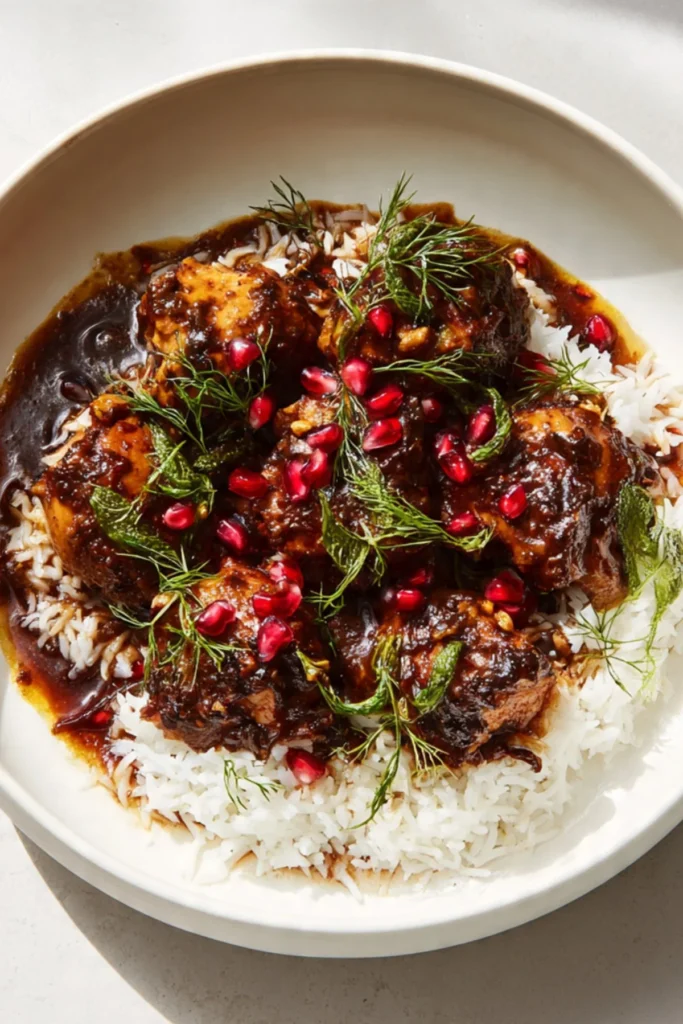
Imagine a deep, ruby-brown sauce that smells of toasted walnuts and bright pomegranate, a glossy cloak around tender chicken that pulls apart with a gentle tug. The aroma is nutty and slightly sweet, the texture luxuriously thick and velvety; a spoonful offers a comforting contrast between the savory meat and the tart, fruit-forward tang of pomegranate. Every bite feels like a quiet celebration—rich, layered, and memorably Persian.
Fesenjan (also spelled Fesenjoon or Fesenjan) is perfect for evenings when you want something that feels both homey and special: think family dinners, holiday tables, or any time you crave comfort with a sophisticated flavor profile. It’s the kind of dish that invites conversation and returns: leftovers taste even better the next day as flavors deepen, and it’s a wonderful centerpiece when you want to show care through cooking.
Dish Snapshot
- Prep Time: 20 minutes (plus grinding/toasting walnuts)
- Cook Time: 1 hour 30 minutes (simmering)
- Total Time: About 1 hour 50 minutes
- Servings: 6
- Difficulty Level: Moderate — straightforward technique, but requires patience during the long, gentle simmer
Nutrition Highlights
The following nutrition breakdown is an estimate per serving (6 servings total) for the recipe as written. These values were calculated using standard ingredient nutrition data from USDA FoodData Central and cross-checked for portion guidance with reputable health sources (e.g., Mayo Clinic). Actual values will vary based on specific brands, whether chicken is bone-in/skin-on, and exact yields after cooking.
Estimated nutrition per serving
- Calories: ~700 kcal
- Protein: ~36 g
- Total Carbohydrates: ~30 g
- Sugars: ~20–25 g (from pomegranate molasses and sugar)
- Dietary Fiber: ~3–4 g
- Total Fat: ~47 g
- Saturated Fat: ~6–8 g
- Sodium: ~600 mg
- Notes: High in healthy polyunsaturated fats from walnuts (including omega-3 ALA); relatively calorie-dense due to nuts and oil. For exact values for your batch, enter your specific ingredients into a nutrition calculator or consult USDA FoodData Central.
Why You’ll Love It
Fesenjan is a sensory and emotional dish at once. Its nutty, slightly sweet-and-tart profile makes it both comforting and elegant—perfect for festive gatherings (nowhere else will pomegranate arils look as celebratory) or a quiet weekend dinner when you want to feed someone you love. The long simmer allows simple ingredients to transform, creating depth without complicated technique. Nutritionally, the walnuts contribute heart-healthy fats and plant protein, making the dish satisfying and nutrient-rich when enjoyed as part of a balanced meal.
How to Make Fesenjan
How to Make Fesenjan
Ingredients
- 2 pounds chicken thighs or drumsticks
- 2 cups walnuts, finely ground
- 3/4 cup pomegranate molasses
- 1 large onion, finely chopped
- 1–2 tablespoons sugar (start with 1 tbsp; adjust to taste)
- 1 1/2 teaspoons salt
- 1/2 teaspoon black pepper
- 1/2 teaspoon turmeric
- 3 cups water or chicken broth
- 2 tablespoons olive oil
Optional ingredients and substitutions
- Optional: 1/2 teaspoon ground cinnamon or a pinch of ground cardamom for warmth
- Fresh pomegranate arils and chopped parsley or cilantro for garnish
- Swap pomegranate molasses with reduced pomegranate juice (simmer until syrupy) + 1–2 tsp sugar if molasses unavailable
- For a richer finish, substitute 1 tbsp butter for 1 tbsp olive oil at the end
- Vegan version: replace chicken with 1 large eggplant (roasted or sautéed) or firm tofu; use vegetable broth
Step-by-step instructions
- Preheat a large skillet or Dutch oven over medium heat.
- Add 2 tablespoons olive oil and sauté the chopped onion until golden, 6–8 minutes. Stir in 1/2 teaspoon turmeric and cook 30 seconds to bloom the spice.
- Add the chicken pieces and brown on all sides, about 6–8 minutes total. Browning boosts flavor but you don’t need to cook the chicken through.
- In a separate dry pan, toast the ground walnuts over medium heat for about 5 minutes, stirring constantly until fragrant. Watch carefully to avoid burning; toasted walnuts are the backbone of fesenjan’s flavor.
- Stir the toasted walnuts into the chicken/onion mixture. Add 3/4 cup pomegranate molasses and 3 cups water or chicken broth. Mix in the sugar, 1 1/2 tsp salt, and 1/2 tsp black pepper.
- Bring to a gentle boil, then reduce heat and simmer uncovered for 1½ hours, stirring occasionally. The sauce will thicken and deepen in color; if it reduces too fast, lower heat and cover partially.
- Taste after about 1 hour and adjust sweetness/tang: add more sugar for sweeter, or a bit more pomegranate molasses for tangier. If too thick, add a splash of water or broth.
- When chicken is tender and the sauce is glossy and thick (not greasy or separated), remove from heat and let sit 10 minutes off heat to settle.
- Serve hot over basmati rice; garnish with pomegranate arils and fresh herbs if desired.
Practical tips
- Grind walnuts relatively fine for a smoother sauce; a quick pulse in a food processor works well.
- Toast walnuts gently to release oils but avoid high heat—burning makes the sauce bitter.
- Low, steady simmer is key: rolling boils can separate the sauce and make it grainy.
- If sauce separates, whisk vigorously off heat or use an immersion blender to re-emulsify gently.
- Bone-in pieces add deeper flavor; if using bone-in, extend cooking until meat is tender and falls off the bone.
Best Pairings
- Serve hot over saffron or plain basmati rice to soak up the sauce.
- Pair with a crisp Shirazi salad (cucumber, tomato, red onion, lemon) for freshness and contrast.
- Offer plain or herbed yogurt on the side to cut through richness.
- For a festive table, serve with roasted root vegetables and warm flatbread.
- Wine pairing: a medium-bodied red with balanced acidity (e.g., Grenache) complements the nutty-tart profile; non-alcoholic: a pomegranate or hibiscus tea works beautifully.
Storing Leftovers
Storing Leftovers
- Room temperature: Do not leave cooked fesenjan at room temperature for more than 2 hours (follow food safety guidance).
- Refrigeration: Store in an airtight container for up to 3–4 days.
- Freezer: Freeze in airtight containers for up to 3 months. Thaw in the refrigerator overnight before reheating.
- Reheating: Gently reheat on the stove over low heat, adding a splash of water or broth if sauce has thickened; ensure it reaches 165°F (74°C) before serving.
Chef’s Advice
- Use fresh walnuts whenever possible; pre-ground or old walnuts can be rancid and will ruin the sauce’s aroma.
- Toasting walnuts is essential—do it in a dry pan and stir constantly until fragrant.
- Balancing sweetness and acidity is a personal preference: start with 1 tbsp sugar and adjust. If you prefer more savory, reduce sugar and increase broth.
- A low, long simmer improves texture; avoid high heat that causes the fats to separate.
- Use bone-in chicken for maximum flavor, and remove bones before serving if preferred—bones help build a deeper-tasting broth during simmering.
Creative Twists
- Vegan Fesenjan: Replace chicken with cubes of roasted butternut squash or seared tempeh; use vegetable broth and a tablespoon of tahini for extra richness.
- Duck or Lamb Variation: Substitute duck legs or lamb shanks for an indulgent, traditional twist (adjust simmer time until meat is fall-off-the-bone tender).
- Citrus & Spice Lift: Add a strip of orange zest and 1/4 tsp ground cardamom during simmering for fruity-spicy complexity.
- Lighter Version: Reduce walnuts to 1 1/2 cups and increase broth for a lighter sauce; serve smaller portions over a larger vegetable base for lower calories.
- Quince Addition: Add peeled, cored quince pieces during the simmer for a classic Persian layer of flavor (adds a pleasant floral-fruit note).
Recipe Q&A
- Can I use store-bought pomegranate molasses?
- Yes—store-bought is convenient and works well. Taste and adjust sugar because brands vary in sweetness and acidity.
- Why is my sauce grainy or oily?
- Over-toasting walnuts or simmering too hot can make the oils separate. Reduce the heat, whisk, or gently blend to bring it back together.
- Can I make fesenjan ahead of time?
- Absolutely. It often tastes better the next day; refrigerate and gently reheat before serving.
- Is this recipe gluten-free?
- Yes, as written it’s naturally gluten-free—just confirm any broth or substitutions are GF.
- How can I reduce calories but keep flavor?
- Use less oil, reduce walnuts slightly (sub with ground sunflower seeds if needed), and serve smaller portions with a bigger salad or roasted vegetables.
Conclusion
Fesenjan is a dish that rewards patience with layers of deep, comforting flavor—nutty, tart, and richly textured. It’s perfect for when you want a centerpiece that feels celebratory but is fundamentally home-style, and it adapts beautifully to vegetarian, lighter, or more indulgent variations. Try this recipe, note your adjustments, and share your results so others can taste the warmth of this Persian classic.
For a photo-rich, step-by-step version and variations, see this detailed guide from Persian Mama: KHORESH FESENJAN خورش فسنجون|FESENJOON.
For a thoughtful personal take that blends culinary notes with cultural context, read this essay and recipe on Bottom of the Pot: A Music Education and a Pomegranate and Walnut Stew – Khoresh Fesenjan.
If you make this fesenjan, let me know how you adjusted the sweetness or which variation you tried—I’d love to hear how it turned out.
Print
Fesenjan
- Total Time: 110 minutes
- Yield: 6 servings 1x
- Diet: None
Description
A rich Persian stew featuring tender chicken simmered in a luxurious walnut and pomegranate sauce, perfect for festive gatherings.
Ingredients
- 2 pounds chicken thighs or drumsticks
- 2 cups walnuts, finely ground
- 3/4 cup pomegranate molasses
- 1 large onion, finely chopped
- 1–2 tablespoons sugar (start with 1 tbsp; adjust to taste)
- 1 1/2 teaspoons salt
- 1/2 teaspoon black pepper
- 1/2 teaspoon turmeric
- 3 cups water or chicken broth
- 2 tablespoons olive oil
Instructions
- Preheat a large skillet or Dutch oven over medium heat.
- Add olive oil and sauté the chopped onion until golden, about 6–8 minutes. Stir in turmeric and cook for an additional 30 seconds.
- Add the chicken pieces and brown on all sides, approximately 6–8 minutes total.
- In a separate dry pan, toast the ground walnuts over medium heat for about 5 minutes, stirring constantly until fragrant.
- Add the toasted walnuts to the chicken/onion mixture. Stir in pomegranate molasses and water or chicken broth. Mix in sugar, salt, and black pepper.
- Bring to a gentle boil, then reduce heat and simmer uncovered for 1½ hours, stirring occasionally.
- Taste and adjust sweetness as needed. If the sauce is too thick, add a splash of water or broth.
- When chicken is tender and the sauce is thick, remove from heat and let sit for 10 minutes.
- Serve hot over basmati rice; garnish with pomegranate arils and fresh herbs if desired.
Notes
Use fresh walnuts for best flavor. Adjust sweetness and acidity according to taste. Leftovers taste even better the next day.
- Prep Time: 20 minutes
- Cook Time: 90 minutes
- Category: Main Course
- Method: Simmering
- Cuisine: Persian
Nutrition
- Serving Size: 1 serving
- Calories: 700
- Sugar: 20g
- Sodium: 600mg
- Fat: 47g
- Saturated Fat: 6g
- Unsaturated Fat: 0g
- Trans Fat: 0g
- Carbohydrates: 30g
- Fiber: 3g
- Protein: 36g
- Cholesterol: 80mg