Gordon Ramsay’s Crispy French Fries: Homemade Perfection Awaits
Introduction
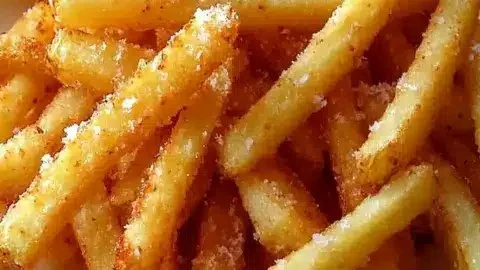
Imagine a basket of golden fries arriving at your table — the first inhale is all warm, salty potato and faint oil notes; the first bite snaps with a perfectly crisp exterior that gives way to a cloud-like, steamy interior. That contrast — crunch then fluff — is why these fries feel like comfort and celebration in one. They make mouths water, conversations linger, and every forkful brings a tiny, joyful moment.
This recipe is ideal for late-night cravings, game-day gatherings, family dinners, and cozy weekends when you want something indulgent but homemade. If you’d like to compare techniques, take a look at Gordon Ramsay’s original recipe to see the source inspiration and variations.
Dish Snapshot
- Prep Time: 40–60 minutes (includes soaking time)
- Cook Time: 20–30 minutes active frying (plus cooling between batches)
- Total Time: 1 hour 10 minutes (approx)
- Servings: 4 (as a generous side)
- Difficulty Level: Intermediate — requires attention to temperature and timing, but perfectly doable at home
Nutrition Highlights
Note: The nutrition values below are estimates per serving, calculated for 4 servings total (4 large Russet potatoes) and assuming approximately 30 g of oil absorbed per serving from frying. Values are rounded. Nutrient data for raw potatoes referenced from USDA FoodData Central; general health guidance referenced from Mayo Clinic and CDC.
Per serving (approximate)
- Calories: 500 kcal
- Protein: 6 g
- Carbohydrates: 51 g
- Fat: 30 g
- Saturated fat: 4 g
- Fiber: 6.5 g
- Sodium: variable (depends on final salting; estimate 300–600 mg)
How these estimates were made:
- Potatoes (300 g per serving): ~231 kcal, 6 g protein, 51 g carbs (USDA FoodData Central figures for russet potatoes).
- Oil absorbed (~30 g per serving): ~270 kcal and ~30 g fat.
- Salt and vinegar contribute minimal calories but affect sodium; use measured salt to track sodium intake.
If you’re monitoring calories or fat, you can reduce oil by using an air fryer or oven-baking method (see variations). For medical dietary guidance, consult resources at Mayo Clinic or CDC for personalized recommendations.
Why You’ll Love It
- Taste & texture: The double-fry method delivers the classic contrast — an impossibly crisp shell and a creamy interior that tastes like pure potato comfort.
- Social & nostalgic pull: Fries are universally loved; they bring people together at dinners, parties, and casual gatherings.
- Versatility & speed: Once you’ve mastered the technique, fries are quick to make in batches and versatile — dress them up for guests or keep them simple for everyday joy.
- Seasonal comfort: These are perfect for chilly evenings with a warm dip, but they also shine as part of summer BBQ spreads.
How to Make Gordon Ramsay’s Crispy French Fries: Homemade Perfection Awaits
Ingredients
- 4 large floury potatoes (e.g., Russet) — the best choice for a fluffy interior and crispy exterior
- 2 tablespoons white vinegar — helps enhance flavor and keeps fries crisper for longer
- 1 tablespoon kosher salt — ideal for seasoning the soaking water
- Oil as needed (canola or vegetable oil, for frying) — use a high smoke-point oil
- Salt for seasoning, to taste
Optional ingredients and substitutions
- Use sunflower or peanut oil instead of canola/vegetable (high smoke point).
- For lower fat: substitute with an air fryer method (see Variations).
- Flavor add-ins: garlic powder, smoked paprika, truffle oil (finish), grated Parmesan.
Method (numbered)
Preparation
- Peel the potatoes (optional — skins add texture and nutrients). Cut into even 1/2-inch to 3/4-inch sticks for classic fries.
- Place cut potatoes in a large bowl of cold water with 2 tablespoons white vinegar and 1 tablespoon kosher salt. Soak for 30–60 minutes. This removes excess surface starch and firms the centers.
- After soaking, rinse the fries briefly under cold water until the rinsed water runs clear. Drain and pat completely dry with clean kitchen towels or paper towels — the drier, the better to avoid spitting oil and to improve crispness.
First Fry (blanch) 4. Heat oil in a deep fryer or a heavy, deep pot to 300–320°F (150–160°C). Use a thermometer — accurate temperature is crucial. 5. Working in small batches (do not overcrowd), fry the potatoes for 5–7 minutes until they are soft and pale — not browned. Remove with a spider or slotted spoon and drain on a wire rack. Let cool for 15–30 minutes (you can chill briefly in the fridge between batches).
Second Fry (crisp) 6. Raise oil temperature to 375–390°F (190–200°C). 7. Fry the blanched potatoes again in small batches for 2–4 minutes, until they turn golden brown and crisp. 8. Remove and immediately season with salt while hot. Drain briefly on a rack or paper towel.
Practical tips embedded in the method
- Don’t overcrowd the pot — oil temperature will drop and fries turn greasy.
- Use a wire rack over a sheet tray to drain fries; paper towels can trap steam and make fries soggy.
- A thermometer is a small investment that guarantees consistent results.
- Keep cooked batches warm in a single layer in a 200°F (95°C) oven while finishing remaining fries.
Best Pairings
- Classic: ketchup, mayo, or a mix (aioli).
- Elevated: truffle mayonnaise, garlic-parmesan sprinkle, or chimichurri.
- Comfort combos: burgers, fried chicken, or fish and chips.
- Light pairings: a crisp salad and lemonade for a summer plate.
- Beverage pairings: a cold beer or a simple soda; for brunch, serve alongside coffee and eggs.
- For a Mediterranean twist, try alongside warm lemon-herb roasted dishes — see a complementary take in this crispy lemon potatoes recipe for inspiration on flavors that match beautifully.
Shelf Life & Storage
- Room temperature: not recommended for more than 2 hours (food safety — bacteria growth risk).
- Refrigerator: store cooled fries in an airtight container for up to 3–4 days. Re-crisp in a 400°F (200°C) oven for 6–8 minutes or in a skillet with a little oil.
- Freezer: place single-layer on a baking sheet to freeze solid, then transfer to a freezer bag — best quality for up to 1–2 months. Reheat from frozen in a 425°F (220°C) oven until hot and crisp.
Chef’s Advice
- Potato choice matters: floury russets yield a fluffy center; waxy potatoes stay firmer and produce a different texture.
- Precise temps: the first lower-temperature fry cooks the interior without browning; the second, hotter fry crisps the exterior — both temps are non-negotiable for classic texture.
- Dry thoroughly: moisture is the enemy of crispness and safety when frying.
- Batch control: small, consistent batches keep oil temperature stable.
- Oil reuse: strain cooled oil and store in a sealed container for future frying up to 2–3 uses (discard if it smells off or smokes at normal frying temperatures).
Creative Twists
- Truffle & Parmesan Fries
- Finish hot fries with a drizzle of truffle oil and a sprinkle of finely grated Parmesan and chopped parsley.
- Sweet Potato Twice-Fry (oven or fry)
- Substitute sweet potatoes. If frying, reduce first-fry time slightly and watch closely as they brown faster. For a healthier twist, toss in a little cornstarch before air-frying to increase crispness.
- Garlic-Herb Fries (vegan)
- After frying, toss fries with minced garlic briefly sautéed in a tablespoon of oil, chopped rosemary, thyme, and flaky sea salt.
- Spicy Cajun Fries
- Season immediately with a mix of smoked paprika, cayenne, garlic powder, and onion powder for bold flavor.
Recipe Q&A
Q: Can I use other potatoes like Yukon Gold? A: Yes. Yukon Gold works well but produces a creamier, less fluffy interior; russets remain the best for that classic fry contrast.
Q: How do I re-crisp leftover fries? A: Reheat in a hot oven (400–425°F / 200–220°C) on a wire rack for 6–10 minutes or toss in a hot skillet with a teaspoon of oil. Avoid microwaving, which makes them soggy.
Q: Can I bake these instead of frying to cut fat? A: Yes — slice, soak, dry, toss in a light coating of oil, and bake on a hot sheet at 425°F (220°C), flipping halfway. For best crispness, use a convection setting or an air fryer.
Q: My fries are limp — what went wrong? A: Likely too much moisture (insufficient drying), overcrowding the oil, or oil temp too low. Ensure thorough drying and maintain proper temperatures for each fry.
Conclusion
If you want fries that evoke that irresistible crisp-to-fluff contrast — fries that make people pause, smile, and ask for another handful — this double-fry method delivers every time. Try it for your next gathering or cozy night in, and share your results with friends and on social channels to start conversations around homemade comfort food.
For a deeper look at crisping techniques and related roasting tips, you might enjoy this guide on roasting for crisp skin: The Best Way to Roast a Duck (Hello, Crispy Skin!). If you’re interested in exploring different cooking fats and techniques for rich flavor, this resource on rendering fat may be helpful: How to Render Lard the Right Way (Snow White, Odorless).
Enjoy the process — and the crunch.