Healthy Korean Fried Chicken
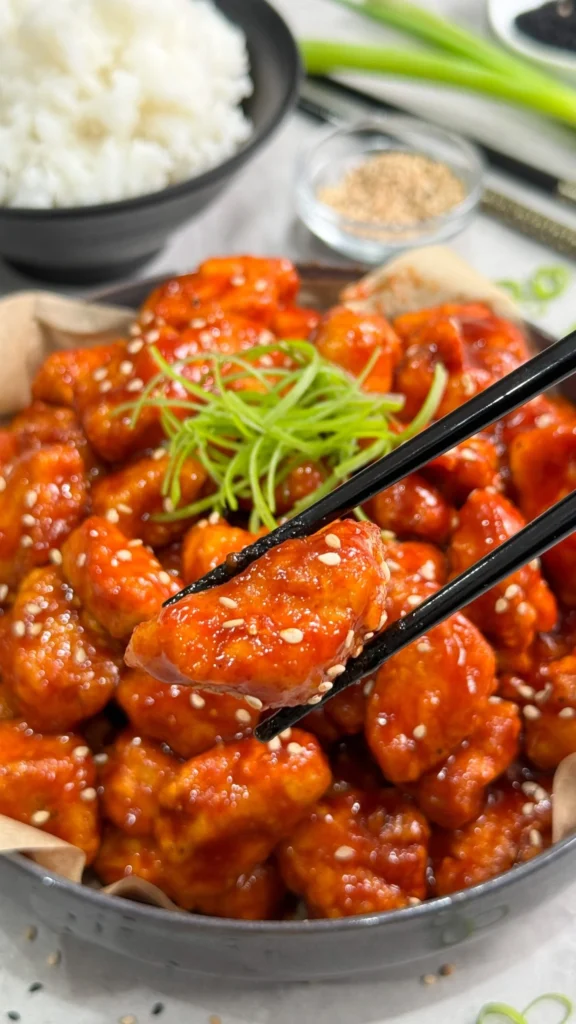
A hot, glossy coat of chili-sweet sauce clings to golden, lightly crisp chicken — the aroma of toasted sesame and gochujang lifts the air, and the first bite offers a satisfying contrast: a crackle of crisp exterior, tender, juicy meat and a bright, sticky heat that lingers just long enough to make you reach for another piece. This Healthy Korean Fried Chicken balances comfort and brightness: sweet honey, umami soy, and the subtle fermented heat of gochujang, finished with sesame and scallions for crunch and fresh pop.
Whether you’re feeding a weeknight family, hosting friends for game night, or craving something bold on a cozy weekend, this version keeps the spirit of Korean fried chicken while trimming unnecessary oil and calories using an air fryer or oven. If you enjoy lighter, air-fried takes on Korean flavors, you might also like this air-fried vegetable option for a meatless side: air-fried Korean chili cauliflower.
At a Glance
- Prep Time: 40 minutes (30 minutes marinating + 10 minutes active)
- Cook Time: 12–18 minutes (air fryer or oven)
- Total Time: ~55–60 minutes
- Servings: 4
- Difficulty Level: Easy–Moderate
Nutrition Highlights
Estimated nutrition per serving (based on 1 kg chicken, yields 4 servings). Values are approximate and calculated using USDA FoodData Central values for raw chicken breast, egg, cornstarch, honey, gochujang, soy sauce, and common condiments. For general health guidance on sodium and dietary limits, consult authoritative sources such as the Mayo Clinic or government nutrition guidelines.
Per serving (approximate)
- Calories: 580 kcal
- Protein: 78 g
- Carbohydrates: 33 g
- Fat: 11 g
- Fiber: 1 g
- Sodium: ~1,100 mg
Notes on the numbers:
- Protein is high because this recipe uses 1 kg (about 2.2 lb) chicken breast, so each portion is protein-forward.
- Sodium is elevated mainly from soy sauce (total soy sauce in the recipe ≈ 75 ml); if you’re watching sodium, reduce the soy sauce or use a low-sodium variety.
- These estimates are approximate; individual ingredient brands and cooking losses will affect totals. Values were derived from USDA FoodData Central and checked against general guidance from Mayo Clinic for recommended sodium limits.
Why You’ll Love It
- Irresistible balance: The sauce layers sweet (honey, ketchup), salty (soy), and savory heat (gochujang) so every mouthful feels complete.
- Comfort with a lighter touch: Using an air fryer or oven cuts the deep-fried oil without sacrificing the crisp exterior that makes Korean fried chicken so craveable.
- Crowd-pleaser and adaptable: It’s perfect for dinners, casual gatherings, or as party finger food; people love the sticky glaze and bright garnishes.
- Health-forward: High in protein and lower in added fat than traditional deep-fried versions—great for those seeking a satisfying, macro-friendly meal.
How to Make Healthy Korean Fried Chicken
Ingredients
- 1 kg kipfilet (chicken breast), trimmed and cut into bite-sized pieces
- 1 el sojasaus (1 tablespoon) — for marinade
- 1 medium ei (egg)
- 1 tl knoflookpoeder (1 teaspoon)
- 1 tl gemalen gember (1 teaspoon)
- 1 tl peper (1 teaspoon, or to taste)
- 60 gram maizena (cornstarch)
- 60 ml sojasaus (for the sauce)
- 80 ml water
- 2 el lightketchup (2 tablespoons)
- 3 el gochujang (3 tablespoons)
- 2 el rijstazijn of natuurazijn (2 tablespoons rice vinegar or plain vinegar)
- 3 el honing (3 tablespoons) — add after removing sauce from heat
Optional ingredients / substitutions: - Low-sodium soy sauce to reduce sodium content
- Coconut or maple syrup instead of honey (1:1 substitution)
- Replace gochujang with 2 tbsp sriracha + 1 tbsp miso as a milder/alternative heat
- For gluten-free: use tamari instead of regular soy sauce; cornstarch is naturally gluten-free (confirm cross-contamination if sensitive)
- For darker, richer flavor, marinate with 1 tsp sesame oil (optional)
Method & Process
- Begin met het op smaak brengen van de kip met sojasaus, ei, knoflookpoeder, gemalen gember en peper. Meng alles goed door elkaar en laat de kip minimaal 30 minuten marineren in de koelkast.
- Verplaats vervolgens de kip in een kom, voeg maizena toe en hussel alles goed door elkaar so that the pieces are evenly coated.
- Preheat your air fryer to 200°C (about 400°F). Arrange the coated chicken in a single layer (don’t overcrowd). Bak de kip 12-15 minuten in de Airfryer op 200 graden Celsius of 15-18 minuten in de oven op dezelfde temperatuur (draai halverwege de baktijd de kip om). If using the oven, place the pieces on a wire rack over a baking sheet for best crisping.
- Maak ondertussen de saus met 60 ml sojasaus, 80 ml water, rijstazijn, gochujang en light ketchup. Warm the sauce gently in a small saucepan over medium heat until the gochujang has dissolved and the mixture is smooth.
- Voeg de honing pas toe nadat je de pan van het vuur hebt gehaald. Meng de saus goed door elkaar, voeg de kip toe en roer alles nog even door so the chicken pieces are well coated.
- Serveer de Korean Chicken met rijst en maak het af met sesamzaadjes, zwarte komijn en lente-ui. Eet smakelijk!
Practical tips:
- Avoid overmixing the chicken after adding cornstarch — gentle tosses keep the coating intact.
- Check doneness by ensuring internal temp reaches 74°C (165°F) with an instant-read thermometer.
- If pieces stick in the air fryer, use a light spray of oil on the basket before arranging the chicken.
- For extra crunch, double-coat a few pieces: dip briefly in beaten egg again and re-coat with cornstarch, then air-fry a minute or two longer.
(For more high-protein chicken inspiration and techniques that deliver juicy results, see this garlic-forward option: garlic parmesan chicken thighs.)
Best Pairings
- Classic rice options: Steamed jasmine or short-grain rice to soak up sauce.
- Fresh contrast: A crisp cabbage slaw, quick pickled cucumbers, or a simple green salad cuts through the sweetness.
- Snack-style: Serve with lettuce leaves for ssam (wraps) and small bowls of kimchi for acidity.
- Drinks: A cold lager or a slightly sweet sparkling tea complements the sticky glaze.
- Presentation tip: Serve on a platter with scallions and toasted sesame seeds scattered on top; provide extra sauce in a small bowl for dunking.
Storage Instructions
- Room temperature: Best eaten immediately. If left at room temperature, consume within 2 hours for food safety.
- Refrigeration: Store in an airtight container for up to 3–4 days. Reheat gently in an air fryer or oven to restore crispness (avoid microwaving if you want to keep texture).
- Freezer: Freeze cooked, sauced chicken in a freezer-safe container for up to 2 months. Thaw in the refrigerator overnight and reheat in an oven or air fryer to crisp.
Chef’s Advice
- Protein cut matters: Boneless, skinless chicken breast gives lean protein and takes well to the coating; using thighs will add juiciness and slightly more fat.
- Cornstarch is the key: It crisps differently than flour — it forms that delicate, crunchy shell without heavy oil absorption.
- Sauce timing: Add honey off the heat to preserve its floral brightness and avoid darkening or bitterness from overcooking sugars.
- Doneness cues: Apart from temperature, look for juices running clear and a firm but springy texture — overcooking will dry breast meat.
- Flavor layering: Toast a teaspoon of sesame seeds briefly before garnishing to deepen aroma.
Creative Twists
- Spicy Garlic Crunch: Add 1–2 minced cloves of garlic to the sauce and 1 tsp chili flakes for extra kick.
- Korean BBQ Variation: Replace honey with 3 tbsp brown sugar and add 1 tbsp of sesame oil; finish with thinly sliced scallions and a sprinkle of toasted sesame.
- Vegetarian Option: Swap chicken with thick cauliflower florets or pressed, sliced extra-firm tofu; increase cornstarch coating slightly and air-fry a few minutes longer for a firm crust.
- Low-Sodium Version: Use low-sodium soy sauce and reduce added salt; add umami with a splash of mushroom soy or a teaspoon of miso in the sauce.
All Your Questions Answered
Q: Can I make this completely oil-free?
A: Yes — the air fryer or a convection oven reduces the need for oil. Lightly spray the basket or rack if you’re concerned about sticking.
Q: What can I substitute for gochujang?
A: Use a mix of sriracha (for heat) + a touch of miso (for umami), or sambal oelek plus a teaspoon of brown sugar to mimic the fermented-sweet profile.
Q: How do I keep the chicken from getting soggy when sauced?
A: Toss the chicken with sauce just before serving and serve immediately. For leftovers, re-crisp in the air fryer, then lightly toss with sauce.
Q: Can I halve the recipe?
A: Yes — ingredient quantities scale down linearly. Reduce marinating time slightly if pieces are smaller.
Q: Is this suitable for meal prep?
A: Yes — keep sauce separate and store individually portioned chicken and rice. Combine and reheat to enjoy the best texture.
Conclusion
Try this healthier take on a Korean classic and enjoy a dish that’s both indulgent and approachable — perfect for weeknights or entertaining. For an alternate Dutch-language take on a similar lighter Korean chicken, see Gezonde Korean Chicken – Mijn smaak. If you’d like a bright, fresh side to balance the richness, this crisp Korean Green Salad – My Korean Kitchen pairs beautifully.
If you make the recipe, please share photos and your variations — I love hearing how readers put their own spin on it. Enjoy!