
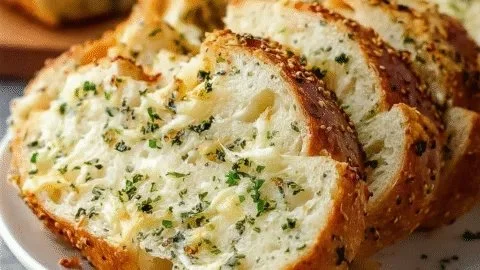
Italian Herb and Cheese Bread
There’s something wonderfully fragrant about a loaf of warm, herb-speckled bread coming out of the oven: the savory lift of Italian seasoning mingling with roasted garlic notes, the nutty saltiness of Parmesan, and the soft, slightly chewy crumb studded with melted mozzarella. The aroma alone can stop a busy afternoon and draw family or friends into the kitchen. When you slice it, steam rises and the crust gives just enough — a golden, slightly crisp exterior giving way to a tender, pillowy interior. Take a bite with butter and you’ll notice layers of texture: a light chew from the crumb, creamy richness from the cheese, and a satisfying herbal finish.
This loaf is perfect for cozy weekend breakfasts, a centerpiece for casual gatherings, or to elevate sandwiches and warm soups during cooler months. It’s uncomplicated enough for a relaxed weeknight baking project, but special enough to bring to holiday tables. Leftover slices make an incredible accompaniment to desserts and can even be transformed into a comforting bread and butter pudding the next day — a great way to stretch your baking efforts into another treat.
At a Glance
- Prep Time: 15 minutes (plus rising time)
- Cook Time: 30–35 minutes
- Total Time: ~1 hour 45 minutes (including two rises)
- Servings: 12 slices (one standard loaf)
- Difficulty Level: Beginner–Intermediate (basic kneading and rising)
Nutrition Information
Estimated nutritional breakdown per serving (one slice, 1/12 of loaf):
- Calories: ~230 kcal
- Protein: ~7.8 g
- Carbohydrates: ~33 g
- Dietary Fiber: ~1.1 g
- Total Fat: ~6.5 g
- Saturated Fat: ~2.3 g
- Sodium: ~420 mg
Notes on accuracy: these values are estimates calculated from standard ingredient nutrition profiles (USDA FoodData Central) and cross-checked with public nutrition references such as Mayo Clinic guidance on daily nutrient recommendations. Actual values will vary depending on exact ingredient brands, cheeses (part-skim vs. whole milk), and how much butter is retained on the crust. For personalized dietary needs, consult nutrition labels or a registered dietitian.
Why You’ll Love It
- Aroma-first impact: From the moment it goes into the oven, this bread fills the house with savory, herbaceous warmth — an instant mood lifter.
- Crowd-pleasing: It hits familiar comfort notes (cheese and herbs) while feeling a touch elevated, so it’s equally welcome for family dinners or casual entertaining.
- Versatile: Serve it plain, dress it up for sandwiches, or turn leftovers into quick breakfast or dessert dishes.
- Simple technique, big reward: The recipe relies on basic baking skills — kneading and patience for rises — but yields a loaf that tastes like you spent hours perfecting it.
How to Make Italian Herb and Cheese Bread
Ingredients
- 4 cups all-purpose flour
- 2 1/4 teaspoons active dry yeast (1 packet)
- 1 1/2 cups warm water (110°F / 45°C)
- 2 tablespoons sugar
- 2 tablespoons olive oil
- 1 1/2 teaspoons salt
- 2 teaspoons dried Italian seasoning
- 1 teaspoon garlic powder
- 1 cup shredded mozzarella cheese
- 1/2 cup grated Parmesan cheese
- 2 tablespoons fresh parsley, chopped (for garnish)
- 1 tablespoon melted butter (for brushing)
Optional ingredients & substitutions
- Use 1 cup whole wheat flour in place of 1 cup all-purpose for a nuttier flavor and slightly denser crumb.
- Substitute 1 tbsp honey for sugar for subtle floral sweetness.
- For a richer loaf, use 1 cup whole-milk mozzarella; for lower fat, choose part-skim mozzarella.
- To make it dairy-free, omit cheeses and add 2 tbsp nutritional yeast for umami; increase olive oil to 3 tbsp for moisture.
- For garlic lovers, fold in 1–2 cloves minced fresh garlic with the cheeses.
Step-by-step Directions
- In a small bowl, stir warm water and sugar. Add yeast and let sit 5–7 minutes until foamy.
- In a large bowl, whisk together flour, salt, garlic powder, and Italian seasoning.
- Add the yeast mixture and olive oil to the dry mix. Stir until dough forms.
- Turn dough out onto a lightly floured surface and knead for 8–10 minutes until smooth and elastic.
- Place dough in a greased bowl, cover, and let rise for 1 hour or until doubled in size.
- Punch down the dough, then knead in the mozzarella and Parmesan until the cheeses are spread evenly throughout.
- Shape the dough into a loaf, place it in a greased loaf pan, and let rise for 30 minutes.
- Preheat oven to 375°F (190°C). Brush the top with melted butter and bake 30–35 minutes until golden and cooked through.
- Remove from oven, sprinkle with chopped parsley, let cool 10 minutes, then slice and serve.
Practical tips
- Check the yeast: If the yeast doesn’t foam after 5–7 minutes, your water may be too hot or the yeast is old—start over with fresh yeast.
- Avoid overmixing: Combine ingredients until they come together, then rely on kneading for gluten development rather than excessive mixing.
- Doneness cues: Tap the bottom of the loaf — a hollow sound indicates it’s done. Internal temperature should be about 190°F (88°C) for enriched breads.
- Cheese distribution: Toss shredded cheeses in a tablespoon of flour before kneading them in to prevent clumping and ensure even spread.
Serve It Up
- Simple slice: Warm a slice and slather with salted butter for breakfast or an afternoon snack.
- Dipping: Cut into thick slices and serve alongside olive oil with balsamic glaze, or use for a charcuterie board with cured meats and pickles.
- Sandwich base: Use as sandwich bread for hot melts or paninis — the herbs and cheese pair beautifully with roasted vegetables, grilled chicken, or Italian cold cuts.
- With soups and stews: A slice is perfect for mopping up tomato bisque, minestrone, or creamy chowders.
- Make it a meal: Pair with a fresh green salad and a hearty main for an easy weeknight dinner; it also complements baked casseroles such as a rich best mac and cheese meatloaf casserole.
Keeping it Fresh
- Room temperature: Store tightly wrapped or in a bread box for 2–3 days.
- Refrigeration: Not recommended for long-term storage (bread can stale faster in the fridge); if desired, keep airtight for up to 4 days.
- Freezer: Slice and freeze in an airtight bag for up to 2 months. Thaw slices at room temperature or toast straight from frozen for best texture.
Chef’s Advice
- Flour choice: Use unbleached all-purpose flour for consistent structure and a tender crumb. If substituting some whole wheat, slightly increase liquid or reduce kneading time to avoid overworking the bran.
- Hydration feel: Dough should be tacky but not overly sticky. If it’s dry, add water 1 teaspoon at a time; if too sticky, dust lightly with flour and adjust kneading.
- Cheese texture: Coarsely shredded cheeses disperse better than pre-shredded mixes coated with anti-caking agents; fresh-grated cheeses melt more uniformly.
- Crust control: For a softer crust brush with additional melted butter after baking; for a crispier crust, place a shallow pan of water in the oven while baking to add steam during the first 10 minutes.
- Timing the rises: In cooler kitchens, allow extra time for the dough to double. Rises that are rushed (not doubled) result in dense loaves.
Fun Flavor Ideas
- Sun-Dried Tomato & Basil: Fold in 1/2 cup chopped sun-dried tomatoes (oil-packed, drained) and 2 tbsp chopped fresh basil; reduce salt slightly.
- Olive & Rosemary: Add 1/2 cup chopped Kalamata olives and 1 tablespoon chopped fresh rosemary for a Mediterranean twist.
- Cheesy Jalapeño: Mix in 1/3 cup chopped pickled jalapeños and swap half the mozzarella for pepper jack for a spicy lift.
- Vegan version: Replace cheeses with 1/4 cup nutritional yeast and add 2 tbsp olive oil extra; use nondairy butter for brushing.
- Gluten-free adaptation: Use a gluten-free all-purpose flour blend (1:1 measure) with 1 tsp xanthan gum if the blend doesn’t already contain it. Note that texture will be different; allow for shorter kneading and handle gently.
Common Questions & Answers
Q: Can I make this bread without a loaf pan?
A: Yes — shape into a round boule and bake on a parchment-lined baking sheet. You may need to reduce the bake time by a few minutes; look for a golden crust and hollow tap sound.
Q: My loaf is dense — what went wrong?
A: Common causes are under-proofing (didn’t double), old/inactive yeast, or not kneading enough to develop gluten. Ensure yeast is active and give the dough time to rise until doubled.
Q: How can I reduce sodium?
A: Reduce added salt to 1 teaspoon and choose low-sodium cheeses or rinse/shake brine-packed cheeses before using. Flavor can be boosted with extra herbs and garlic powder instead.
Q: Can I add whole herbs instead of dried?
A: Yes — use three times the amount of fresh herbs as dried (so about 6 teaspoons fresh) and fold them in gently with the cheeses.
Q: What can I do with leftover bread?
A: Freeze slices for toast, make croutons, use in sandwiches, or transform into a sweet bread pudding or savory strata.
Conclusion
If you’re eager to compare variations, the classic Subway-style loaf inspires many homebakery copycats — see this helpful Subway Bread Recipe (Italian Herb and Cheese Copycat) for a different take. For another recipe riff and more ideas for using extra slices, this Italian Herb and Cheese Bread Subway Copycat Recipe offers additional tips.
I hope this Italian Herb and Cheese Bread becomes your go-to savory loaf — please try the recipe, leave a comment about your favorite variation, and share photos so we can build a community of bakers enjoying warm, herb-scented loaves together.