
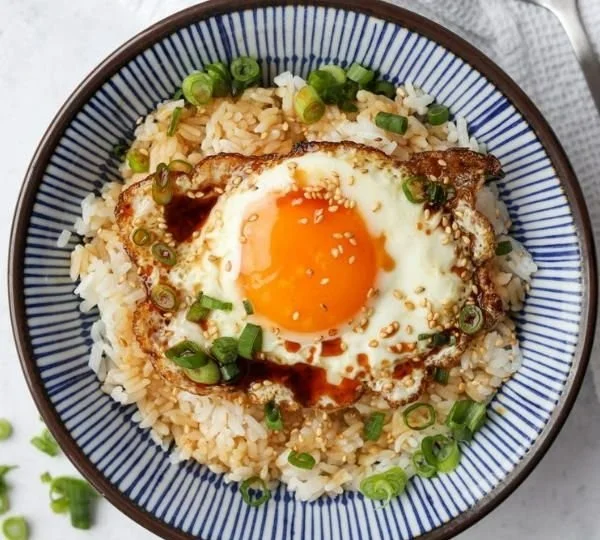
Korean Egg Rice (Gyeranbap): a tiny bowl of comfort that hits every cozy-spot in your palate. Imagine the warm, slightly sticky short-grain rice steaming up as soon as it’s scooped into a bowl — a faintly sweet, nutty rice aroma rising to meet the sharp, savory pop of soy sauce and the toasty whisper of sesame oil. A golden fried egg, its edges crisp and its yolk glossy, sits like a little sun on the rice; when you pierce it, the yolk spills silkily through the grains, coating them in richness. The crunchy finish of sesame seeds and the bright onion bite add contrast: textural fireworks in a dish that’s otherwise gloriously simple.
There’s a kind of quiet happiness baked into this dish — perfect for bleary weekday mornings when you need something fast and meaningful, for a late-night snack after studying, or for an easy, crowd-pleasing side at a casual gathering. If you love egg-forward breakfasts, try pairing this with a different oven-baked egg dish for variety — I often alternate with baked cottage cheese eggs when I want something heartier.
Dish Snapshot
- Prep Time: 2 minutes (if rice is already cooked)
- Cook Time: 3–5 minutes (to fry the egg)
- Total Time: 5–7 minutes
- Servings: 1 (scale up as needed)
- Difficulty Level: Easy — great for beginner cooks and instant comfort seekers
Nutrition Highlights
Nutrition per serving (approximate)
- Calories: 370 kcal
- Protein: 11 g
- Carbohydrates: 46 g
- Fat: 15 g
- Fiber: 1 g
- Sodium: ~370 mg
- Cholesterol: ~186 mg
Notes on the numbers: these values are estimates calculated using standard USDA FoodData Central entries for cooked short-grain white rice, large egg, butter, sesame oil, sesame seeds, and a teaspoon of soy sauce. For precise values tailored to different brands or quantities (for example, low-sodium soy sauce or larger servings of rice), consult USDA FoodData Central or your preferred nutritional database. Trusted sources such as the USDA and Mayo Clinic recommend balancing portions of carbohydrate-rich foods like rice with protein and healthy fats — which this simple bowl does naturally with the egg and sesame oil.
Why You’ll Love It
- Instant comfort: creaminess from the egg yolk meets the satisfying chew of short-grain rice.
- Speed and simplicity: ready in under 10 minutes when rice is pre-cooked.
- Memory and mood: an unpretentious bowl that feels like home — perfect for nostalgic mornings or as a communal dish shared among friends.
- Versatility: add kimchi, scallions, or gochujang to dial up spice or serve simply with butter and soy sauce for pure, soothing richness.
- Nutrition balance: provides a quick combination of carbs, high-quality protein, and healthy fats for energy and satiety.
How to Make Korean Egg Rice
Ingredients (serves 1)
- 1 cup cooked white short-grain rice (about 180–200 g)
- 1 large egg
- 1 tsp soy sauce (adjust to taste; use low-sodium if preferred)
- 1 tsp sesame oil
- 1 tsp unsalted butter (or 1 tsp neutral oil)
- 1 tbsp chopped green onion (scallion)
- 1 tsp toasted sesame seeds
Optional ingredients and substitutions
- Use brown rice or mixed grains for more fiber (cook times and textures differ).
- Substitute vegan butter or a neutral oil; for a vegan version, use scrambled tofu instead of egg.
- Add 1 tsp gochujang for a spicy-sweet kick.
- Use tamari for gluten-free soy flavor.
Step-by-step instructions
- Heat the cooked rice in a microwave-safe bowl until steaming (about 1–2 minutes) or warm in a pan over low heat with a splash of water to loosen the grains.
- In a small nonstick pan, melt the butter over medium heat. Crack in the egg and fry to your desired doneness: sunny-side up with a runny yolk (3–4 minutes) or over-easy/over-medium if you prefer the yolk less runny.
- Place the hot fried egg on top of the warmed rice.
- Drizzle the soy sauce and sesame oil evenly over the egg and rice.
- Sprinkle the chopped green onion and toasted sesame seeds on top.
- Serve warm and, if you like, gently break the yolk and mix everything together so the yolk coats each grain.
Practical tips
- Use day-old or well-cooled rice if possible; it separates better and mixes nicely with the egg. If using freshly cooked rice, fluff thoroughly to avoid clumps.
- For a creamier texture, add a small knob of butter to the rice before topping with the egg.
- To avoid overcooking the egg, reduce heat if the edges brown too quickly; medium heat will yield a gently cooked white and a runny yolk.
- If you enjoy baked egg variations, try this flavor profile alongside something like baked feta eggs with tomatoes and spinach for a change of pace.
Best Pairings
- Classic accompaniments: kimchi, quick-pickled cucumbers, or seasoned spinach (sigeumchi-namul) for traditional contrasts.
- Beverage partners: green tea or a mild-roast coffee for breakfast; a cold barley tea (boricha) for a more Korean home-style feel.
- Heartier sides: grilled sausages, pan-seared mushrooms, or grilled fish for a fuller meal.
- Condiment ideas: a small dollop of gochujang for spice, extra butter for richness, or a splash of rice vinegar to brighten flavors.
- Presentation tip: serve in a small shallow bowl and finish with a scattering of toasted sesame seeds and a single sprig of green onion for a clean, inviting look.
Keeping it Fresh
- Room temperature: Do not keep cooked rice or an assembled egg rice bowl at room temperature for more than 2 hours (1 hour if the ambient temperature is above 90°F / 32°C). Bacillus cereus spores can grow in rice left out too long.
- Refrigeration: Store cooled components in airtight containers for up to 3–4 days. For best quality, refrigerate rice and eggs separately if possible; reheat thoroughly before serving.
- Freezer: Cooked rice can be frozen for 1–2 months in a sealed container; thaw overnight in the fridge and reheat. The assembled dish with a fried egg does not freeze and reheat well (the egg texture suffers). Freeze only the rice for best results.
Pro Tips & Tricks
- Use slightly undercooked rice (a bit firmer) if you plan to reheat; it will soften without getting gluey.
- Toast sesame seeds briefly in a dry pan to intensify their aroma before sprinkling.
- Break the yolk at the table for theatre and to keep the rice from getting soggy too early — mixing at the last moment preserves texture.
- Swap butter for a small dab of gochujang-butter (softened butter mixed with gochujang) to elevate umami and add gentle heat.
- If you like a crunchy contrast, top with thinly sliced roasted seaweed (gim) or furikake.
Switch It Up!
- Vegan version: Replace the egg with crumbled, well-seasoned tofu scramble (turmeric, black salt for eggy flavor, a splash of soy sauce) and use sesame oil to finish.
- Kimchi Gyeranbap: Stir chopped, well-drained kimchi into the warm rice before topping with the fried egg; add a teaspoon of gochujang mixed with sesame oil for a spicy-sour lift.
- Cheese & butter twist: Stir a teaspoon of unsalted butter and a tablespoon of grated parmesan into the rice for a decadent, creamy result; finish with fried egg.
- Protein boost: Stir in flaked cooked chicken, canned tuna (in water, drained), or leftover bulgogi for a heartier meal.
All Your Questions Answered
Q: Can I use brown rice instead of white rice?
A: Yes — brown rice works well but has a nuttier texture and chewier bite. Use pre-cooked brown rice and expect a firmer mouthfeel; nutritional fiber will be higher.
Q: Is the egg always fried? Can it be soft-boiled?
A: You can top the rice with a soft- or medium-boiled egg for an equally luxurious yolk. Soft-boiled eggs add a slightly different texture but are just as delicious.
Q: How do I prevent the rice from getting mushy when reheating?
A: Reheat rice covered with a damp paper towel in the microwave to retain moisture but avoid steam build-up. Add a sprinkle of water and heat in short bursts, fluffing between intervals.
Q: I’m watching my sodium — how can I reduce it?
A: Use low-sodium soy sauce or reduce to 1/2 tsp. Alternatively, use a splash of light tamari for gluten-free, lower-sodium options.
Q: Can I make this ahead for meal prep?
A: Prep rice and any add-ins (kimchi, sautéed veggies) ahead; keep eggs separate and fry just before serving for best texture.
Conclusion
Korean Egg Rice is proof that comfort food doesn’t have to be complicated — a few thoughtful ingredients transform humble cooked rice into something memorable. If you want to explore similar simple egg-forward recipes, check out this classic Egg rice (Gyeranbap: 계란밥) recipe by Maangchi for a traditional take, or this quick guide to a 10-minute version from 10-minute Easy Gyeran Bap (Korean Egg Rice) – Christie at Home for speedy inspiration.
Try it tonight, snap a photo, and share your variations — I’d love to hear how you make this little bowl your own.
Print
Korean Egg Rice (Gyeranbap)
- Total Time: 7 minutes
- Yield: 1 serving 1x
- Diet: Vegetarian
Description
A cozy bowl of comfort featuring warm short-grain rice topped with a golden fried egg, soy sauce, and sesame oil, perfect for any time of day.
Ingredients
- 1 cup cooked white short-grain rice (about 180–200 g)
- 1 large egg
- 1 tsp soy sauce
- 1 tsp sesame oil
- 1 tsp unsalted butter (or 1 tsp neutral oil)
- 1 tbsp chopped green onion (scallion)
- 1 tsp toasted sesame seeds
Instructions
- Heat the cooked rice in a microwave-safe bowl until steaming (about 1–2 minutes) or warm in a pan over low heat with a splash of water to loosen the grains.
- In a small nonstick pan, melt the butter over medium heat. Crack in the egg and fry to your desired doneness (3–4 minutes for sunny-side up).
- Place the hot fried egg on top of the warmed rice.
- Drizzle the soy sauce and sesame oil evenly over the egg and rice.
- Sprinkle the chopped green onion and toasted sesame seeds on top.
- Serve warm, breaking the yolk before mixing everything together if desired.
Notes
Use day-old rice for best results. Can add kimchi or gochujang for extra flavor.
- Prep Time: 2 minutes
- Cook Time: 5 minutes
- Category: Main Course
- Method: Stovetop
- Cuisine: Korean
Nutrition
- Serving Size: 1 bowl
- Calories: 370
- Sugar: 1g
- Sodium: 370mg
- Fat: 15g
- Saturated Fat: 4g
- Unsaturated Fat: 8g
- Trans Fat: 0g
- Carbohydrates: 46g
- Fiber: 1g
- Protein: 11g
- Cholesterol: 186mg