Shiratama Dango (Rice Dumplings/Mochi Balls)
Introduction
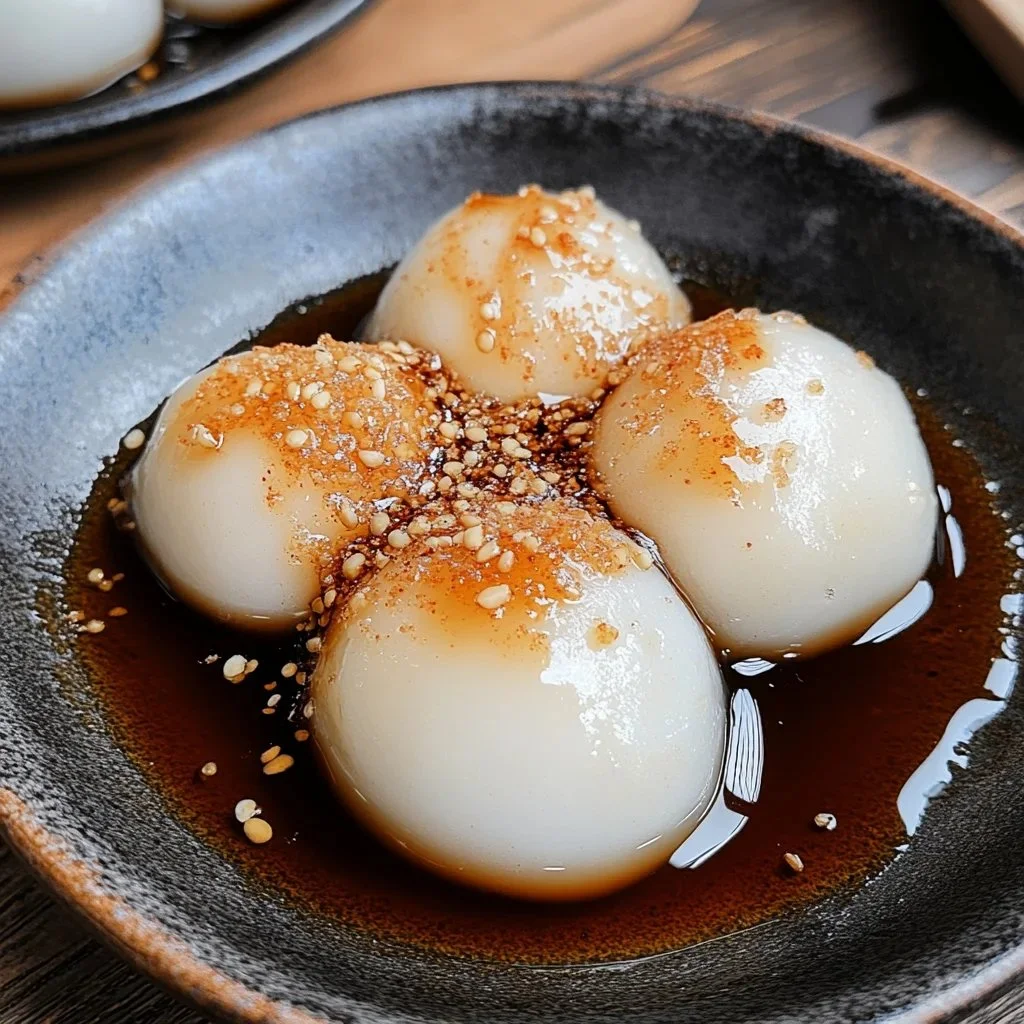
Picture a small, pillowy dumpling: the faintly sweet smell of steamed glutinous rice, the delicate chew that yields with the same satisfyingly soft resistance as a well-kneaded pillow. Shiratama dango are tiny mochi-like rice dumplings that arrive at your tongue warm and springy, their surface glossy from a quick boil and cooling, the center tender and lightly elastic. When you drizzle kuromitsu (dark brown sugar syrup) over them and dust them with toasted kinako (roasted soybean powder), the contrast of caramel-like sweetness, nutty warmth, and pillowy chew is quietly joyful.
These little dumplings are perfect for cozy mornings with green tea, for intimate gatherings where everyone reaches for the same bowl, or as a quick comfort snack to lift an otherwise ordinary afternoon. They also shine during festivals and seasonal celebrations — small replicas of warmth and sharing that you can make in under 30 minutes.
Dish Snapshot
- Prep Time: 10 minutes
- Cook Time: 6 minutes (plus ice bath)
- Total Time: 16 minutes
- Servings: 2 (about 12 small dango; adjust size/quantity as preferred)
- Difficulty Level: Easy — beginner-friendly with a few simple tactile cues (see tips)
Nutrition Highlights
Below is an estimated nutritional breakdown per serving for the plain shiratama dango (made from 100 g glutinous rice flour, divided into 2 servings). These values are approximate and calculated from standard nutrition data for glutinous rice flour (USDA FoodData Central) and common serving conversions. If you serve your dango with kuromitsu and kinako, see the “with toppings” line.
Per serving (plain dango, no toppings)
- Calories: ~183 kcal
- Protein: ~3.1 g
- Carbohydrates: ~40.7 g
- Fat: ~0.5 g
- Fiber: ~0.6 g
- Sodium: ~2–5 mg
Typical additions per serving (approximate)
- 1 tbsp kuromitsu (brown sugar syrup): +≈52 kcal, +≈13.5 g carbs
- 1 tbsp kinako: +≈35 kcal, +≈3 g protein, +≈2 g fat
Per serving (with 1 tbsp kuromitsu + 1 tbsp kinako)
- Calories: ~270 kcal
- Protein: ~6 g
- Carbs: ~54 g
- Fat: ~2.5 g
Notes: These estimates use nutrient values from USDA FoodData Central and standard tablespoon measures. For clinical dietary advice (e.g., for diabetes or other conditions), consult resources like the CDC or a registered dietitian. Values will vary based on exact brands and portion sizes.
Why You’ll Love It
- Texture & Taste: Shiratama dango deliver a uniquely pleasing chew — springy, soft, and satisfying without being heavy. The neutral rice flavor is a delicious canvas for kuromitsu, kinako, matcha, or sweet bean paste.
- Quick & Comforting: Ready in under 20 minutes, they’re ideal for last-minute treats or spontaneous tea-time gatherings.
- Nostalgia & Sharing: Small and communal, shiratama often evoke childhood memories or festival vibes, making them emotionally resonant when served to loved ones.
- Naturally gluten-free: When made with pure glutinous rice flour, they’re suitable for gluten-free diets (confirm packaging for cross-contamination).
Preparation Guide
Ingredients
- 100 g glutinous rice flour (shiratamako)
OR - 90 g mochiko + 10 g potato starch (alternative combination)
- 90 ml water (approx.; adjust as needed)
- Dark brown sugar syrup (kuromitsu) for serving (to taste)
- Roasted soybean powder (kinako) for serving (to taste)
Optional ingredients and substitutions
- 1 tsp matcha powder (fold into dough or dustings)
- Sweet red bean paste (anko) for filling or serving
- Black sesame paste or crushed toasted sesame for coating
- Coconut milk or sweetened condensed milk for a tropical drizzle
- Brown sugar or maple syrup instead of kuromitsu
Step-by-step Instructions
- Measure your flour base. If using shiratamako, use 100 g. If using mochiko, mix 90 g mochiko with 10 g potato starch in a bowl.
- Add half the water (≈45 ml) to the flour in a mixing bowl. If using mochiko/potato starch, combine them first then add water.
- Stir gently to combine, then gradually add the remaining water until a smooth dough forms. The dough should be soft but not sticky — similar in texture to an earlobe.
- Knead the dough lightly for 1–2 minutes until smooth and cohesive. Avoid heavy kneading which can make the dough gummy.
- Divide the dough into equal pieces (for example, 12 pieces). Roll each piece between your hands into small balls and press slightly in the center so they’re a little flattened — this helps even cooking.
- Bring a pot of water to a rolling boil. Gently drop the dumplings into the boiling water, stirring once or twice to prevent sticking.
- Boil until the dumplings float to the surface, then continue cooking for about 2–3 minutes to ensure they’re cooked through (total cook time ~3–5 minutes depending on size).
- Prepare an ice bath (bowl of cold water with ice). Using a slotted spoon, transfer cooked dango to the ice bath immediately to stop cooking and preserve texture.
- Drain and serve on a small plate, drizzle with kuromitsu and dust with kinako (or choose your preferred topping).
Practical tips
- If dough is too sticky, dust your hands with a little extra rice flour — don’t add too much or dumplings will dry out.
- If dough is too dry and cracks, add water 1 tsp at a time until it comes together.
- Uniform size ensures even cooking.
- Ice bath is crucial: it stops carryover cooking and keeps the texture springy.
Best Pairings
- Drinks: Matcha or sencha green tea (classic), hojicha for a toasty contrast, or a lightly sweet latte for a modern twist.
- Toppings: Kuromitsu and kinako (classic); sweet red bean paste (anko) on the side; black sesame paste or toasted sesame; grated fresh fruit with a drizzle of condensed milk for a dessert bowl.
- Desserts: Serve alongside a scoop of vanilla or matcha ice cream, or thread dango onto skewers and lightly grill for mitarashi-style glazed dango.
- Savory pairing: A small cup of miso soup balances the sweetness if serving as part of a larger meal.
Storage Instructions
- Room temperature: Best eaten same day. If left at room temp, consume within 4–6 hours for best texture and safety.
- Refrigeration: Store in an airtight container for up to 2–3 days. Note: refrigeration causes the dango to firm and become chewier; reheat in hot water for a minute or microwave covered with a damp paper towel to soften.
- Freezer: You can freeze cooked dango for up to 1 month. Freeze on a tray until solid, then transfer to a freezer bag. Reheat by boiling briefly or microwaving with moisture. Texture won’t be identical to freshly made, but it remains quite pleasant.
Expert Tips
- Flour choice: Shiratamako (pure glutinous rice flour) yields the smoothest, chewiest texture; mochiko works well but often needs a small starch addition for structure.
- Texture cue: “Earlobe” test — press the dough lightly; it should indent and spring back slightly without tearing.
- Water temperature matters: Use room-temperature water; very hot or cold water changes how the starch hydrates.
- Avoid overmixing: Excessive kneading can make mochi tough and gluey; mix until smooth and stop.
- Don’t overcook: Dumplings that boil too long become dense. Once they float, allow a short additional cook (2–3 minutes) depending on size.
- Flavor infusions: To flavor the dough, knead in a small amount of matcha, cocoa, or fruit puree — reduce added liquid slightly when using purées.
Creative Twists
- Matcha & White Bean: Add 1 tsp matcha powder to the dough for green, fragrant dango. Serve with white bean paste or a dusting of sugar.
- Anko-Filled Dango: Flatten each ball, place ~½ tsp sweet red bean paste in the center, seal and roll back into a ball before boiling.
- Grilled Mitarashi: Skewer boiled dango, grill briefly until lightly charred, and brush with a sweet-savory mitarashi glaze (soy sauce + sugar + water + cornstarch).
- Black Sesame or Kurogoma: Coat cooked dango in crushed black sesame mixed with a touch of sugar and sesame oil for a nutty, bold flavor.
- Tropical Coconut: Serve with a drizzle of sweetened coconut milk and mango slices for a summer-inspired plate.
Frequently Asked Questions
Q: What’s the difference between shiratama and other mochi?
A: Shiratama refers to small rounded dumplings made from shiratamako (glutinous rice flour) and are typically boiled; other mochi varieties (like pounded mochi) use whole cooked glutinous rice that’s pounded into dough. Shiratama is quicker and lighter.
Q: Can I use regular rice flour?
A: No — regular (non-glutinous) rice flour lacks the sticky starch needed and will produce crumbly dumplings. Use glutinous rice flour (shiratamako or mochiko).
Q: My dango turned out too hard or rubbery. What happened?
A: Most likely overcooking or too much kneading. Also water ratios matter; if the dough is too dry, it can become dense. Follow the earlobe texture cue and avoid extended boiling.
Q: Can I freeze raw dough?
A: Freezing raw dough is not ideal because thawing changes hydration and texture. It’s better to shape, boil, cool, and then freeze cooked dango.
Q: Are shiratama naturally gluten-free?
A: Yes, when made from pure glutinous rice flour they are gluten-free. Always check packaging for cross-contamination warnings if you have celiac disease or severe gluten sensitivity.
Conclusion
Shiratama dango are a simple, soulful treat — fast to make, endlessly adaptable, and perfectly suited to both quiet solo moments and shared gatherings. Try making a small batch tonight, experiment with a topping, and see which variation becomes your go-to comfort snack. For more recipe inspiration and a classic presentation, check out Shiratama Dango – Nakatomi Test Kitchen, and for a brown-sugar (kuromitsu) syrup variation with step-by-step photos, visit Japanese Sweet Rice Dumplings with Brown Sugar Syrup Recipe. Share your photos and variations — I’d love to see how you make this little piece of Japanese comfort your own.
Print
Shiratama Dango (Rice Dumplings/Mochi Balls)
- Total Time: 16 minutes
- Yield: 2 servings 1x
- Diet: Gluten-Free
Description
Shiratama dango are soft, pillowy rice dumplings made from glutinous rice flour, typically served with sweet toppings like kuromitsu and kinako for a delightful treat.
Ingredients
- 100 g glutinous rice flour (shiratamako) or 90 g mochiko + 10 g potato starch
- 90 ml water (approx.; adjust as needed)
- Dark brown sugar syrup (kuromitsu) for serving (to taste)
- Roasted soybean powder (kinako) for serving (to taste)
Instructions
- Measure your flour base. If using shiratamako, use 100 g. If using mochiko, mix 90 g mochiko with 10 g potato starch in a bowl.
- Add half the water (≈45 ml) to the flour in a mixing bowl, stirring gently to combine.
- Gradually add the remaining water until a smooth dough forms.
- Knead the dough lightly for 1–2 minutes until smooth and cohesive.
- Divide the dough into equal pieces (e.g., 12 pieces) and roll each piece into small balls, slightly flattening them.
- Bring a pot of water to a rolling boil, then gently drop the dumplings in, stirring to prevent sticking.
- Boil until the dumplings float, then continue cooking for another 2–3 minutes.
- Prepare an ice bath to stop cooking and preserve texture. Transfer cooked dango using a slotted spoon.
- Drain and serve drizzled with kuromitsu and dusted with kinako.
Notes
Best eaten same day. Store in an airtight container for up to 2–3 days in the fridge. Freeze cooked dango for up to 1 month, reheating in boiling water or microwaving with moisture.
- Prep Time: 10 minutes
- Cook Time: 6 minutes
- Category: Dessert
- Method: Boiling
- Cuisine: Japanese
Nutrition
- Serving Size: 6 dango
- Calories: 270
- Sugar: 0g
- Sodium: 5mg
- Fat: 2.5g
- Saturated Fat: 0.5g
- Unsaturated Fat: 2g
- Trans Fat: 0g
- Carbohydrates: 54g
- Fiber: 0.6g
- Protein: 6g
- Cholesterol: 0mg