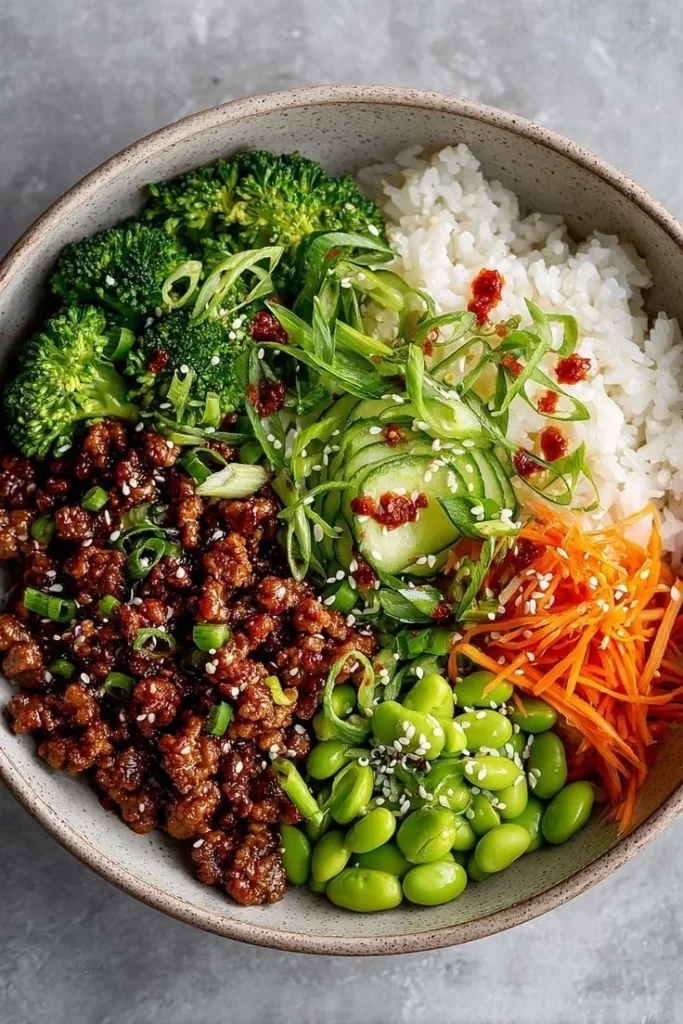
Teriyaki Turkey Rice Bowl
Introduction
The moment the teriyaki hits the skillet, a warm, glossy aroma rises—sweet soy, a whisper of garlic, and the toasty edge of browned turkey. Each bite is a satisfying contrast: tender, savory turkey, crisp-tender vegetables, and fluffy rice that soaks up every drop of sauce. The teriyaki glaze gives a caramel-kissed sheen while green onions add a fresh pop; texturally, it’s comforting and lively at once.
This bowl is built for everyday life: a speedy weeknight dinner, a make-ahead lunch that travels well, or a cozy solo supper when you want something nourishing without fuss. If you love bowls that balance sweet and savory with familiar comfort, you’ll feel seen by this recipe. For more weeknight rice-bowl inspiration, try this quick street-corn chicken rice bowl for a different flavor profile: 30-minute street corn chicken rice bowl.
At a Glance
- Prep Time: 10 minutes
- Cook Time: 12 minutes
- Total Time: 22 minutes
- Servings: 4 bowls
- Difficulty Level: Easy — great for beginners and busy cooks
Nutrition Highlights
Estimated nutrition per serving (one of four bowls). Values are approximations calculated from standard food composition data (USDA FoodData Central) and reflect typical brands/ingredients; actual values will vary by specific products and portion sizes.
- Calories: ~370 kcal
- Protein: ~31 g
- Carbohydrates: ~32 g
- Sugars (from teriyaki and vegetables): ~6–8 g
- Fiber: ~2 g
- Fat: ~15 g
- Saturated fat: ~2.5–3 g
- Sodium: ~700–900 mg (varies widely with teriyaki sauce brand)
- Vitamins & minerals: Provides vitamin A and C from mixed vegetables, iron and B vitamins from turkey.
Notes on accuracy and health:
- These figures are approximate and intended as a practical guide; for precise tracking, weigh your ingredients and consult USDA FoodData Central or a registered dietitian.
- If you’re watching sodium, choose a low-sodium teriyaki or make your own with low-sodium soy sauce (the teriyaki sauce is the main sodium contributor). For general nutrition guidance on balanced meals, reputable resources include the CDC and Mayo Clinic.
Why You’ll Love It
- Speed and simplicity: From stovetop to bowl in about 20 minutes, it’s ideal for weeknights or when you need a satisfying meal fast.
- Comfort with a bright twist: The sticky-sweet teriyaki glaze comforts while vegetables add color, crunch, and freshness.
- Family-pleasing: Mild flavors and familiar textures make this bowl friendly for kids and adults alike—perfect for busy households or casual gatherings.
- Healthful for busy lives: Lean ground turkey is a high-protein, lower-fat alternative to beef, and this recipe is easy to adapt for whole grains and extra vegetables for added nutrients.
How to Make Teriyaki Turkey Rice Bowl
Ingredients
- 1 pound lean ground turkey
- 2 cups cooked rice (white or brown)
- 1 cup mixed vegetables (such as bell peppers, broccoli, and carrots), chopped
- 1/3 cup teriyaki sauce
- 2 tablespoons olive oil
- Salt and pepper to taste
- Green onions for garnish (optional)
Optional ingredients & substitutions
- Use 1 cup cooked brown rice instead of white for more fiber.
- Swap olive oil for avocado oil or sesame oil (use sparingly for flavor).
- Substitute ground chicken or crumbled firm tofu for a different protein.
- Use low-sodium teriyaki or make your own (low-sodium soy sauce + a touch of honey + garlic + ginger + cornstarch slurry).
Method & Process
- Prepare rice ahead or use leftover rice. If using fresh, cook rice first so it’s ready when the turkey finishes.
- In a large skillet, heat olive oil over medium heat.
- Add the ground turkey and season lightly with salt and pepper. Cook, breaking it up with a spoon, until browned and cooked through, about 6–8 minutes. Ensure there’s no pink remaining (internal temp for ground turkey should reach 165°F / 74°C).
- Stir in the mixed vegetables and cook for 3–4 minutes until they’re tender-crisp. If using harder vegetables (like raw carrots or broccoli), give an extra minute or two or par-cook them briefly.
- Pour in the teriyaki sauce and stir to coat the turkey and vegetables evenly. Let simmer for 1–2 minutes so the sauce thickens slightly and clings to the ingredients.
- Serve the turkey mixture over cooked rice. Garnish with sliced green onions if desired.
Practical tips
- Avoid overcooking the turkey; it dries out quickly. Remove from heat as soon as it reaches safe doneness.
- If your teriyaki sauce is thin, add a small cornstarch slurry (1 tsp cornstarch + 1 tbsp water) to thicken.
- To boost flavor, sauté a teaspoon of grated ginger and a clove of minced garlic for 30 seconds before adding the turkey.
Serving Suggestions
- Serve It Up: Spoon the teriyaki turkey over steamed rice and finish with scallions and sesame seeds for a classic presentation.
- Mix-and-match bowls: Offer toppings like sliced avocado, pickled cucumbers, kimchi, or a soft-boiled egg to let people customize their bowls.
- Lighter option: Serve over a bed of mixed salad greens or cauliflower rice to cut carbs.
- Make it lunchbox-friendly: Pack rice and turkey separately to keep textures fresh, then combine before eating.
For a creamy, tropical-style bowl option, try pairing ideas inspired by this coconut chicken rice bowl: coconut chicken rice bowl.
Storage Instructions
- Room temperature: Do not leave the cooked bowl at room temperature for more than 2 hours (1 hour if ambient >90°F) — per USDA food safety guidance.
- Refrigeration: Store cooled components in airtight containers for 3–4 days. Keep rice and turkey in separate containers for best texture.
- Freezer: Freeze the turkey mixture (without rice) in airtight freezer-safe containers for up to 3 months. Thaw overnight in the refrigerator before reheating. Cooked rice freezes well for up to 1 month; reheat gently with a splash of water.
Chef’s Advice
- Browning technique: Let the turkey sit undisturbed in the pan for the first minute to develop a light crust — that Maillard flavor deepens the overall taste.
- Texture balance: Keep vegetables slightly crisp to contrast the tender turkey and soft rice.
- Sauce control: Add the teriyaki gradually and taste as you go — many store-bought sauces are sweeter or saltier than homemade, so adjust to preference.
- Heat cue: If you like a glaze that clings, simmer the sauce just long enough to reduce and become glossy; avoid high heat that scorches the sugars.
Fun Flavor Ideas
- Gluten-free variation: Use a gluten-free teriyaki or make a sauce from tamari, honey, and ginger. Serve over brown rice or quinoa.
- Vegan twist: Swap ground turkey for crumbled tempeh or extra-firm tofu, use a vegan teriyaki, and boost umami with a tablespoon of mushroom soy or a splash of rice vinegar.
- Spicy-sesame kick: Stir in Sriracha or gochujang and finish with toasted sesame oil and seeds for a bolder, spicy-sweet bowl.
- Citrus-ginger refresh: Add a tablespoon of orange juice and extra grated ginger to the sauce for a bright, citrus-forward profile.
Frequently Asked Questions
Q: Can I use ground turkey breast or higher-fat turkey?
A: Yes. Ground turkey breast is leaner and will be lower in fat; higher-fat blends will be richer and may release more oil — drain if desired.
Q: My sauce is too salty. How do I fix it?
A: Add a splash of water, a teaspoon of honey or brown sugar, or a squeeze of citrus to balance saltiness. Adding more rice or vegetables to the dish dilutes the overall saltiness per serving.
Q: How can I speed this up even more?
A: Use pre-cooked rotisserie turkey or store-bought pre-cooked grains; microwave vegetables or use a frozen steamable vegetable mix.
Q: Can I meal-prep this for the week?
A: Yes — cook the turkey and vegetables, portion into containers over rice, and refrigerate. For best texture, store rice and turkey separately if possible.
Q: Is this recipe healthy?
A: It can be: lean protein, vegetables, and controlled portions of sauce make it balanced. Swap to brown rice, reduce oil, and choose low-sodium teriyaki to improve nutrition further.
Conclusion
Give this Teriyaki Turkey Rice Bowl a try when you want a fast, crowd-pleasing meal that’s flexible and full of comfort. If you enjoyed the flavors, you might also like this take on a similar concept from Healthy Ground Turkey Teriyaki Rice Bowl – Yellow Bliss Road for additional inspiration, or explore another variation at Ground Turkey Teriyaki Rice Bowl – A Peachy Plate. Share your photos and tweaks in the comments — I love seeing how readers make this bowl their own.