Indonesian Sticky Coconut Cake (Wingko Babat)
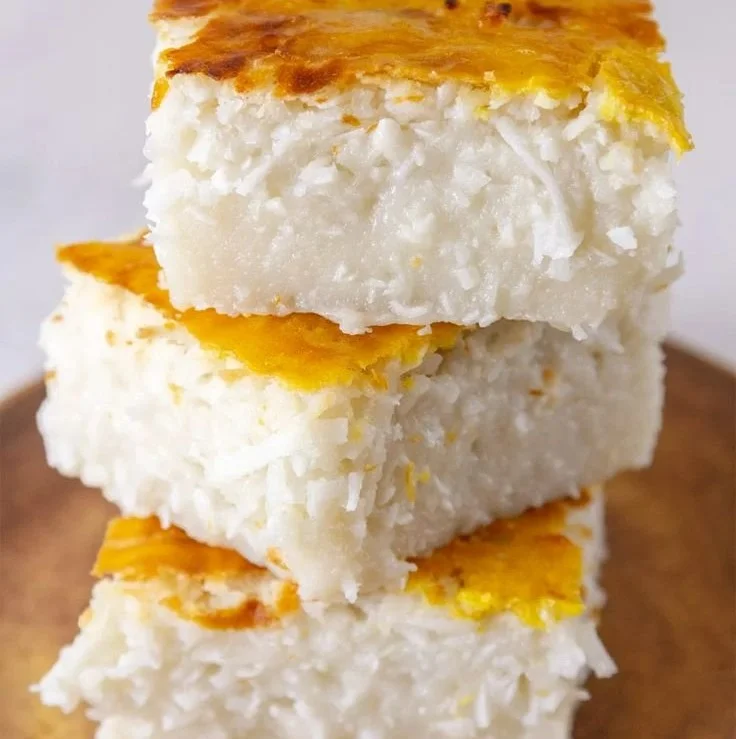
There’s a moment when the oven door opens and a warm, caramel-sweet steam rolls out: that heady scent of toasting coconut mingled with a hint of vanilla. Wingko Babat — Indonesia’s beloved sticky coconut cake — delivers that exact memory in every bite: a golden, slightly crisp exterior giving way to a moist, chewable interior studded with tender coconut strands. The first forkful is both nostalgic and comforting — sweet but not cloying, richly coconutty, with a satisfying chew that invites another piece.
This cake is perfect for cozy weekend breakfasts, an afternoon snack with strong coffee, or a plate of small squares shared around family visits and festive gatherings. It’s simple enough for a quick bake yet special enough to serve at celebrations. If you’re already in a coconut mood, you might also enjoy a lighter breakfast option like homemade coconut flour pancakes alongside a small piece of Wingko.
At a Glance
- Prep Time: 10 minutes
- Cook Time: 30–40 minutes
- Total Time: 45–55 minutes (including cooling)
- Servings: 8 (about 2-inch squares)
- Difficulty Level: Easy — beginner-friendly, no special equipment required
Nutrition Highlights
Estimated nutritional information per serving (1 of 8):
- Calories: ~270 kcal
- Protein: ~2.5 g
- Carbohydrates: ~33 g
- Fat: ~15 g
- Dietary Fiber: ~2 g
- Sodium: ~150 mg
Notes on accuracy: These values are approximations calculated from standard ingredient nutrient profiles (USDA FoodData Central and related food composition references). Actual nutrition will vary with brands (especially canned coconut milk), whether you use fresh vs. frozen coconut, and your chosen serving size. For general guidance on portion control and dietary needs, consult resources such as the USDA FoodData Central or professional health sites.
Perfect For…
- Cozy mornings when you want a sweet, warming start without a complicated recipe.
- Gifting at potlucks and community gatherings — cut into small squares and wrap in banana leaf for an authentic touch.
- Festive seasons where coconut-based treats are traditional; Wingko carries a comforting, communal vibe that pairs well with shared celebrations.
- A quick, no-fuss dessert when you crave texture: crunchy top, sticky center, and shredded coconut in every bite.
Method & Process
Ingredients
- 2 cups grated coconut (fresh or frozen) — about 160 g
- 1 cup glutinous rice flour (also called sweet rice flour) — about 160 g
- 1/2 cup granulated sugar — about 100 g
- 1/2 teaspoon salt
- 1 cup full-fat coconut milk — 240 ml (canned is typical)
- 1 teaspoon vanilla extract
- Banana leaves or parchment paper (for lining the baking dish), optional
- Optional ingredients and substitutions:
- Reduce sugar to 1/3 cup for a less-sweet cake.
- Use light coconut milk to lower calories (texture will be slightly less rich).
- Fold in 2 tablespoons of sweetened condensed milk for extra caramel notes (increases sweetness and richness).
- Replace 1/4 cup glutinous rice flour with tapioca starch for a slightly more elastic chew.
- Add 1–2 tablespoons toasted sesame seeds or finely chopped toasted peanuts on top for crunch.
Steps
- Preheat the oven to 350°F (175°C). Grease an 8×8-inch baking dish or line it with banana leaves or parchment paper. Using banana leaves adds subtle aroma and authentic presentation.
- In a large mixing bowl, combine the grated coconut, glutinous rice flour, sugar, and salt. Whisk briefly to distribute ingredients evenly.
- Slowly pour in the coconut milk and vanilla extract while stirring, mixing until you have a smooth, uniform batter — it will be thick and slightly pourable. Avoid overmixing once combined; you want the coconut strands intact for texture.
- Pour the batter into the prepared baking dish, smoothing the top with a spatula. Tap the dish gently on the counter to release air pockets.
- Bake for about 30–40 minutes, rotating the pan once halfway through. The top should be golden brown and slightly crisp, and a toothpick inserted into the center should come out mostly clean (a few moist crumbs are fine — you want it tender, not dry).
- Let it cool in the pan for at least 20 minutes before cutting into pieces. Cooling helps the cake set so you get clean squares.
Practical tips:
- If the top browns too quickly, tent a piece of foil loosely over the cake for the remaining baking time.
- Use fresh coconut when available for the best aroma and texture; frozen works well but thaw and drain excess liquid.
- The cake firms up as it cools — slicing while very hot can lead to crumbling.
Best Pairings
- Serve warm or at room temperature alongside a strong Indonesian-style coffee or a robust black tea — the bitterness balances the cake’s richness.
- Spread a thin pat of butter on each warm square for a glossy, melt-in-your-mouth finish.
- For a dessert platter, offer a small scoop of coconut sorbet or vanilla ice cream to contrast temperatures and textures.
- Pair with a light fruit salad (mango, pineapple, and lime) to cut through the cake’s richness, or present it with a creamy coconut dessert such as a blueberry coconut vegan cheesecake for a coconut-themed spread.
Shelf Life & Storage
- Room temperature: Store covered at room temperature for up to 24 hours in a cool, dry place. Because the recipe contains coconut milk, refrigerate if ambient temperatures are warm.
- Refrigeration: Place in an airtight container and refrigerate for up to 5–7 days. Reheat gently in a 300°F (150°C) oven for 8–10 minutes to restore some chew and warmth.
- Freezer: Wrap individual squares tightly in plastic wrap and store in a freezer-safe container for up to 2 months. Thaw in the refrigerator overnight and reheat before serving.
- Food safety note: Per CDC guidance, perishable foods should not be left at room temperature for more than 2 hours; if in doubt, refrigerate.
Chef’s Advice
- Choose good-quality, full-fat coconut milk for the most authentic richness and mouthfeel. Shake the can well before measuring.
- Grate coconut coarsely if you like distinct strands in every bite; for a more uniform texture, finely grate or pulse briefly in a food processor.
- Watch the top during the last 10 minutes of baking — the sugars caramelize quickly and give Wingko its signature golden crust.
- If your oven runs hot or the pan is dark, reduce the temperature by 15–20°F and extend baking time slightly to avoid burning the edges.
Creative Twists
- Pandan-Infused Wingko: Add 1 tablespoon pandan paste or 3 tablespoons pandan juice (strained) to the wet ingredients for a fragrant green-hued variant — a classic Southeast Asian pairing.
- Chocolate Coconut: Fold in 2 tablespoons of cocoa powder and top with shaved dark chocolate for a tropical-chocolate twist.
- Vegan/Lower-Sugar: Use light coconut milk and swap sugar for an erythritol/monk fruit blend (adjust sweetness to taste); note texture will change slightly.
- Nutty Crunch: Mix in 1/3 cup chopped roasted peanuts or almonds for texture; press some on top before baking to enhance presentation.
Recipe Q&A
Q: Can I use desiccated or sweetened shredded coconut instead of fresh?
A: You can use desiccated coconut (rehydrate with a little water or coconut milk) but avoid sweetened coconut — it will change the sweetness and texture. Frozen grated coconut is an excellent substitute.
Q: Why is my wingko too dry or crumbly?
A: Likely overbaked or not enough coconut milk. Reduce oven time by 5–10 minutes and ensure your measuring of liquid is accurate. Using fresh grated coconut helps retain moisture.
Q: How do I make it less sticky/less sweet?
A: Reduce sugar to 1/3 cup and bake until the top lightly browns — this will reduce perceived stickiness. Serving chilled also makes it less sticky.
Q: Is this gluten-free?
A: Yes — glutinous rice flour contains no wheat gluten and is naturally gluten-free. However, check flour packaging for cross-contamination warnings if you have celiac disease.
Q: Leftover ideas?
A: Cut into small cubes and toast lightly in a dry skillet for crunchy coconut bites, or fold small pieces into yogurt for a textured topping.
Conclusion
Give Wingko Babat a try the next time you want a simple, soulful baking project that rewards you with irresistible coconut aroma and chew. If you’d like to explore more traditional variations and background, read a home-cook’s take at Sticky Coconut Cake (Wingko Babat) – Life Currents, or compare a family heirloom recipe in this thoughtful write-up at My Grandmother’s Plakkoek / Wingko (Indonesian Sticky Coconut ….
If you make this, I’d love to hear how you served it — share photos and tips in the comments and join our community of coconut lovers.