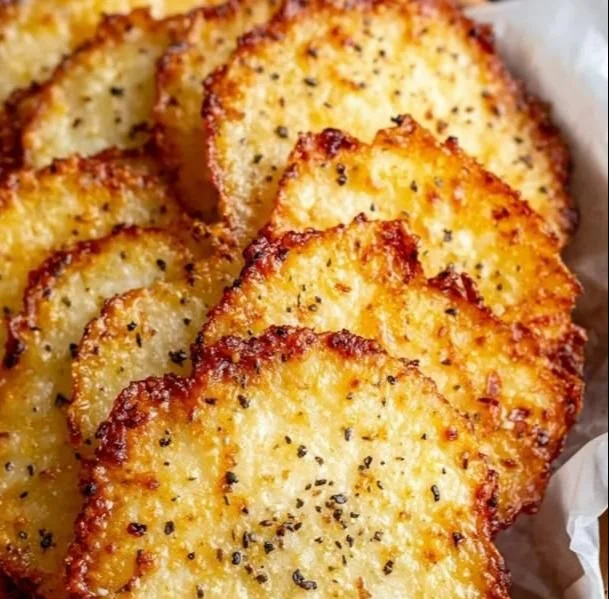
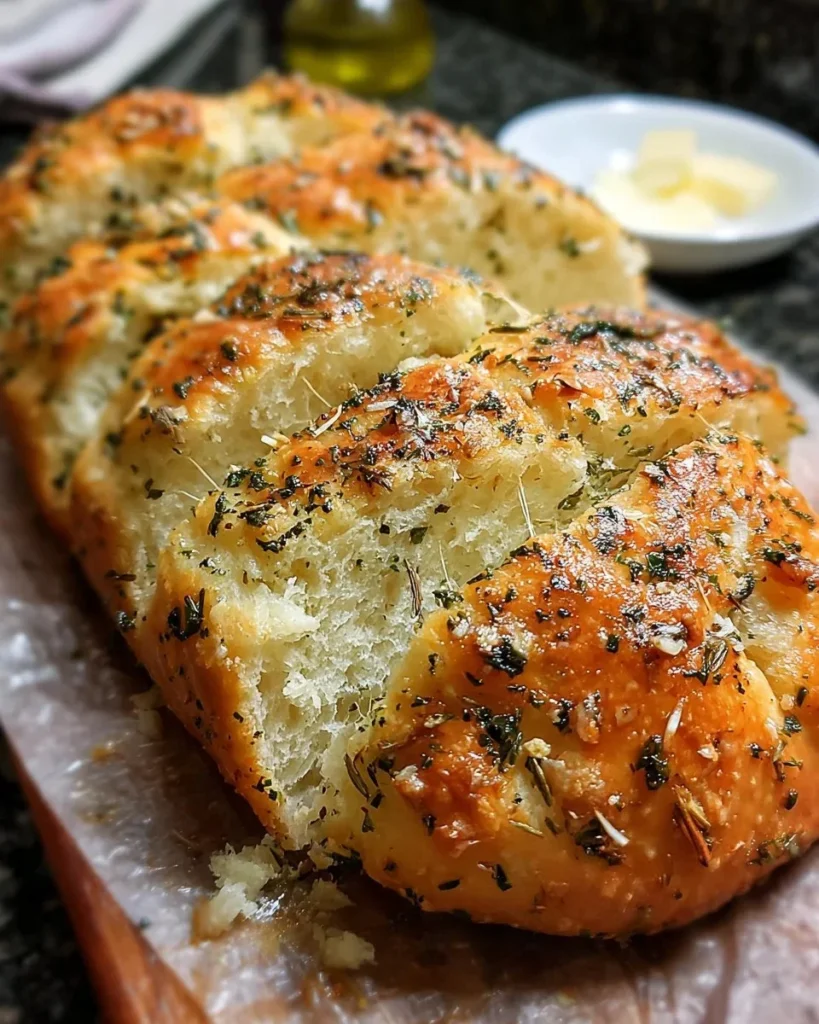
A warm loaf that smells like comfort: Garlic Parmesan Herb Bread
There’s a rare kind of kitchen alchemy when butter, roasted garlic, and sharp Parmesan meet warm, crusty bread. The first inhale—heady garlic softened by olive oil, the bright, piney lift of rosemary and oregano, and the savory umami of Parmesan—will stop you in your tracks. Tear into a slice and you get a contrast: a thin, golden crust that gives way to a tender, slightly chewy crumb threaded with flecks of herbs and little bursts of garlic. Served warm with melting butter, this bread is pure, simple comfort.
This Garlic Parmesan Herb Bread is perfect for so many moments: cozy weekend breakfasts, as a star side for weeknight soups, or pulled out at gatherings when you want something homemade without drama. If you love the idea of rustic bread with bold flavors but don’t have hours to fuss, this recipe delivers — and if you enjoy exploring closely related loaves, you might also appreciate this take on a classic garlic-herb Dutch oven loaf: garlic herb Dutch oven bread.
At a glance
- Prep Time: 20 minutes (active)
- Cook Time: 18–20 minutes
- Total Time: 1 hour 55 minutes (includes rise times)
- Servings: About 8 slices (one medium loaf divided into 8 servings)
- Difficulty Level: Easy — great for beginner bakers
Nutrition Highlights
Estimated nutrition per serving (1 out of 8 slices). These are approximate values calculated from standard ingredient nutrient profiles (USDA FoodData Central) and rounded for clarity. Use these as guidance; exact values will vary by brands and actual ingredient weights.
- Calories: ~205 kcal
- Protein: ~5.5 g
- Carbohydrates: ~31 g
- Fiber: ~1.1 g
- Sugars: ~1.6 g
- Fat: ~6.4 g
- Saturated fat: ~2.8 g
- Sodium: ~365 mg
Notes on nutrition: estimates above are based on USDA nutrient profiles for all-purpose flour, Parmesan cheese, olive oil, butter, garlic, and added sugar. For general daily guidance, the USDA Dietary Guidelines and CDC recommend focusing on portion sizes, whole foods, and limiting excess sodium and saturated fat. If you need precise tracking, weigh your ingredients and consult USDA FoodData Central or a registered dietitian for tailored advice.
Why You’ll Love It
- Irresistible aroma and flavor: The roasted garlic and toasted Parmesan create a savory, slightly nutty backbone while the mixed dried herbs add Mediterranean warmth.
- Sociable and versatile: It’s an easy crowd-pleaser—bring it to potlucks, use it as a dipper for stews, or serve as the center of a casual breadboard.
- Quick and forgiving: With instant yeast and a straightforward method, you get a beautiful loaf without long, technical handling. It’s ideal when you want homemade bread but don’t have an entire afternoon.
- Comfort food with personality: This bread elevates simple butter into a memorable bite; it also pairs beautifully with wines, cheeses, and seasonal soups.
Cooking Directions
Ingredients
- 1 teaspoon salt
- 1 cup warm water (about 100–110°F / 38–43°C)
- 1 tablespoon granulated sugar
- 1 tablespoon instant dry yeast
- 1 teaspoon dried basil
- 1 teaspoon dried oregano
- 2 teaspoons dried rosemary (crushed between your fingers)
- 6 cloves garlic, finely chopped (or minced)
- 2 to 2½ cups all-purpose flour (start with 2 cups; you’ll add up to ½ cup more as needed)
- ⅓ cup Parmesan cheese, grated
- 1 tablespoon butter (split for topping)
- 2 tablespoons olive oil (for the dough and greasing)
Optional ingredients & substitutions
- Use 100% olive oil (omit butter) for a dairy-free version; or swap Parmesan for a nutty aged Pecorino.
- Replace up to half the flour with whole wheat for a nuttier loaf (expect a firmer crumb).
- Add 1–2 tablespoons fresh chopped parsley or chives after baking for brightness.
- For a vegan variation, use plant-based butter and nutritional yeast instead of Parmesan.
Step-by-step instructions
- In a large bowl, combine warm water, sugar, and instant dry yeast. Stir once and let sit for about 1 minute until foamy. (If it doesn’t foam within 5 minutes, your yeast may be inactive—start with fresh yeast.)
- Stir in salt, dried basil, dried oregano, dried rosemary, and the chopped garlic until well blended.
- Add 2 cups of all-purpose flour and the grated Parmesan to the bowl. Mix with a wooden spoon or dough hook until a sticky dough forms.
- Gradually add more flour—up to ½ cup—while mixing, until the dough pulls away from the sides and feels soft and stretchy but still a bit tacky.
- Drizzle 1 teaspoon of olive oil into a clean bowl, turn the dough to coat, and cover with a towel or plastic wrap. Let rise at room temperature until doubled, about 1 hour.
- Preheat the oven to 375°F (190°C) and grease a baking sheet lightly with olive oil.
- Gently punch down the dough and divide it into two balls (or keep as one larger round). Shape into rounds and place them on the prepared baking sheet.
- Cover loosely and let rise for an additional 15–20 minutes until puffy.
- Brush about ½ tablespoon of butter (melted) on top of each dough round before baking. Optionally, sprinkle a little extra Parmesan or flaky sea salt.
- Bake for 18–20 minutes, until the tops are golden brown and the loaves sound hollow when tapped underneath.
- Remove from the oven, transfer to a cooling rack, and allow to cool slightly before slicing. Serve warm with butter or as an accompaniment to soups and salads.
Practical tips
- Avoid overworking the dough: too much kneading or adding too much flour will make the crumb dense. Aim for a slightly tacky dough that holds its shape.
- Check doneness by tapping the bottom of the loaf—it should sound hollow. An internal temperature of about 190–200°F (88–93°C) is a good cue for a fully baked loaf.
- If you prefer deeper garlic flavor, roast the garlic beforehand and fold the softened cloves into the dough instead of raw minced garlic.
- For a crisper crust, bake directly on a preheated baking stone or place a shallow pan with hot water on the oven floor to create steam.
(Additional technique inspiration for Dutch oven-style loaves can be found in a nearby variation if you like "no-fuss" crustier methods: garlic herb Dutch oven method.)
Best Pairings
- Classic pairings: Serve warm with salted butter or a garlic-herb butter for maximum comfort.
- Soups & stews: Tomato basil soup, creamy potato leek, or minestrone make excellent companions.
- Cheese & charcuterie: Pair with aged Manchego or a creamy Brie and a fruit jam for an elegant board.
- Breakfast & brunch: Toast slices and top with avocado and a soft-boiled egg or serve with scrambled eggs and roasted tomatoes.
- Light salads: A peppery arugula salad with lemon vinaigrette balances the richness of the loaf.
Shelf Life & Storage
- Room temperature: Store in a paper bag or wrapped in a clean tea towel for 1–2 days to preserve crust texture; a sealed plastic bag will keep it softer but can make the crust less crisp.
- Refrigeration: Not recommended for storage—refrigeration can dry bread faster. If needed, keep in an airtight container for up to 3 days.
- Freezer: Slice and wrap tightly in plastic wrap and foil, or use a freezer bag—store up to 3 months. Reheat from frozen in a 350°F (175°C) oven for 10–15 minutes until warmed through.
Chef’s Advice
- Freshness of yeast matters: instant dry yeast is forgiving, but check the expiry date. If your kitchen is cool, place the covered dough in a slightly warm but switched-off oven to rise faster.
- Herbs: crush dried rosemary between your fingers to release oils; if using fresh herbs, double the amount for stronger flavor.
- Cheese: Finely grate the Parmesan so it distributes evenly. If you want pockets of cheesy flavor, sprinkle a few tablespoons on top before baking.
- Texture tip: For a lighter crumb, allow the dough to do the work—gentle folding and a single, patient rise produce better results than vigorous kneading.
- Crust variation: For a shinier crust, brush with an egg wash (1 egg beaten with 1 tablespoon water) before baking; for a softer crust, brush with olive oil and cover partially with foil for the last 5 minutes.
Creative Twists
- Vegan & cheesy: Omit butter, use 2 tablespoons olive oil, and replace Parmesan with 3 tablespoons nutritional yeast plus 2 tablespoons ground cashews for a cheesy flavor.
- Olive & sun-dried tomato: Fold in ¼ cup chopped kalamata olives and 2–3 tablespoons chopped sun-dried tomatoes for a Mediterranean loaf.
- Herbed garlic knots: After the first rise, shape the dough into small knots, brush with garlic butter and bake—perfect for parties.
- Whole grain upgrade: Replace 1 cup of the all-purpose flour with whole wheat flour and add 1 tablespoon honey to balance density.
- Spicy kick: Add ½ teaspoon red pepper flakes to the dough or brush with chili-infused olive oil for a subtle heat.
Common Questions & Answers
Q: Can I use active dry yeast instead of instant yeast?
A: Yes—proof active dry yeast in the warm water with sugar for 5–10 minutes until foamy, then continue with the recipe. Use the same weight/amount as instant (1 tablespoon is usually fine).
Q: My dough is too sticky to shape—what should I do?
A: Dust your hands and the work surface with a little flour and gently fold the dough until it’s manageable. Add flour a tablespoon at a time; avoid adding too much to prevent a dense loaf.
Q: Can I make this in a stand mixer?
A: Absolutely. Use the dough hook and mix on low-to-medium speed until the dough is smooth and elastic, about 5–7 minutes.
Q: How do I reheat leftover slices without drying them out?
A: Wrap slices in foil with a pat of butter and reheat at 325°F (160°C) for 10–12 minutes, or toast quickly on a skillet.
Q: Is there a way to make this lower in sodium?
A: Reduce the added salt to ½ teaspoon and use a low-sodium Parmesan or reduce the Parmesan by a tablespoon. Keep in mind flavor will be milder.
Conclusion
This Garlic Parmesan Herb Bread is one of those recipes that feels both indulgent and approachable—a fragrant, flavorful loaf that lifts simple meals and makes gatherings feel special. Try it as written, experiment with one of the creative twists, and if you love variations that produce a crustier, Dutch oven-style loaf, you’ll find inspiration in this delicious pull-apart approach on How Sweet Eats: Roasted Garlic Parmesan Herb Pull Apart Bread. For another rustic take and technique ideas that emphasize a classic crust and crumb, see this Rustic Garlic Parmesan Herb Bread guide: Rustic Garlic Parmesan Herb Bread.
If you try the recipe, please share your photos and tweaks in the comments below—I love hearing which variations become your go-to. Happy baking!